Good boundary lighting reveals the parts of a garden that people use while leaving unnecessary brightness out of the...
- There are no more items in your cart
- Shipping
- Total €0.00
Long-Drop Lighting for Tall Homes: What to Specify Before Ordering
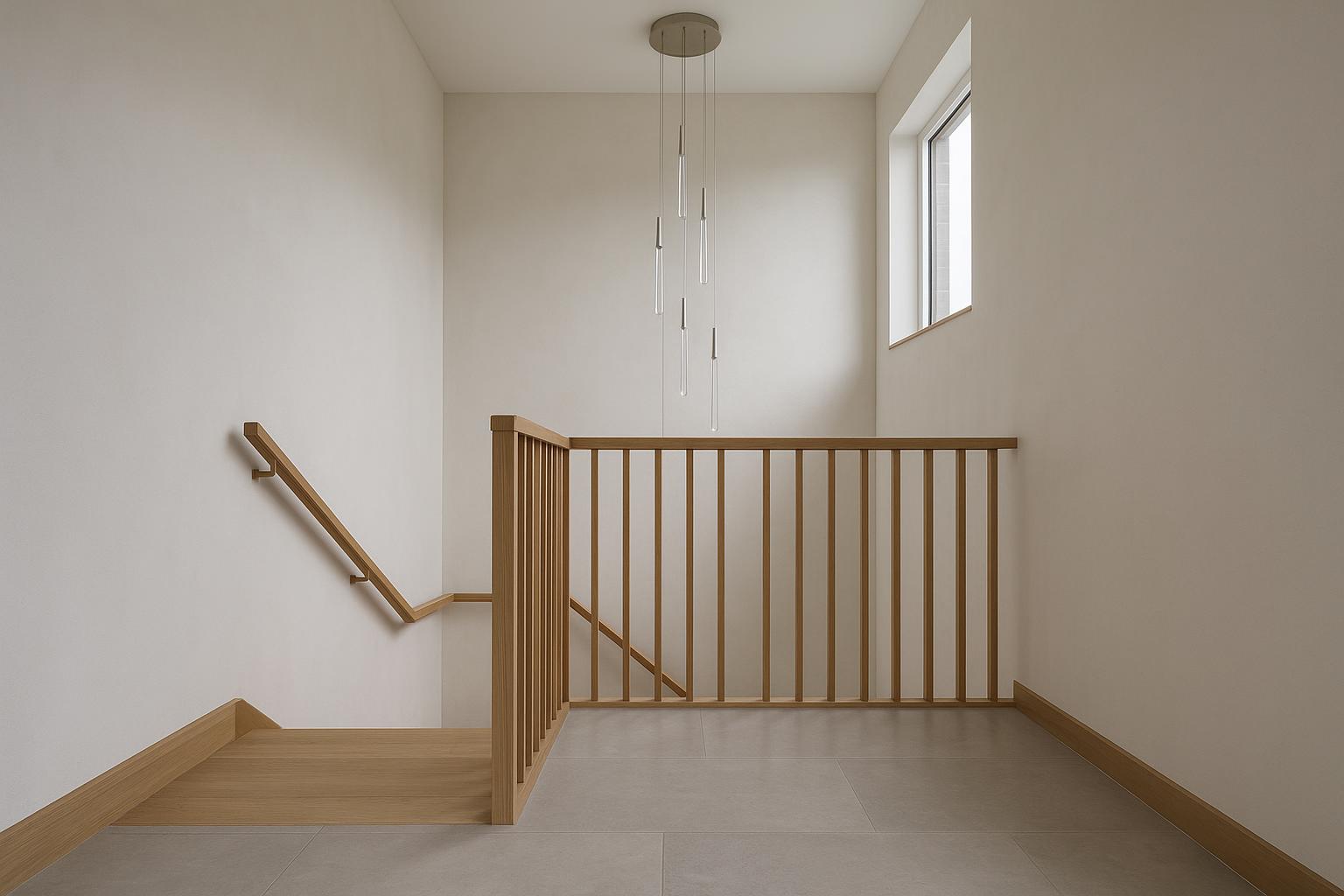
A long-drop light is bought for a volume, not just a ceiling. That distinction matters in a stairwell, vaulted hallway or double-height extension, where the fitting may be visible from several floors and against different backgrounds. Its width, illuminated body, suspension and ceiling plate all contribute to the result.
Online photographs are useful for judging style, but they rarely convey how a fitting will occupy a particular home. Before ordering, turn the room into a simple specification: where the decorative body should sit, how it will look from the landing, what light it must provide and how it can be installed and maintained. This gives you a more reliable basis for comparison than choosing the longest available cable or the most dramatic photograph.
Measure the void as a vertical section
A floor plan records width and length but says little about the most important dimension here: the space between the ceiling and the occupied parts of the room. Measure the floor-to-ceiling height and the usable width of the void. In a stairwell, also note landing edges, handrails, newel posts and any turn in the stairs. In an extension, record upper windows, doors and the position of the dining table or sitting area below.

Draw a rough side view and mark the proposed ceiling point. Then indicate where you want the visible body of the fitting to begin and end. A temporary length of string can help establish the drop, while a paper or cardboard outline can suggest its width. View the mock-up from the hallway, stairs and upper landing. It is easier to move string than to reposition a substantial ceiling light after installation.
Set the lower limit before choosing a design
Start with the lowest acceptable point rather than the maximum suspension offered by a product. The fitting must remain clear of normal movement, opening doors, furniture and the route used to carry bulky items through the house. A pendant above a fixed dining table presents different constraints from a stairwell chandelier suspended over an open well.
There is no single drop that suits every tall room. Stair geometry, ceiling structure and the position of the electrical point all affect the decision. Mark the proposed lower edge and ask your electrician to assess it in the room. Where a fitting hangs near stairs or a landing, check its full width as well as its lowest point.
Inspect the fitting from every viewing level
Tall-space lighting is often seen from above and below within the same journey through the home. From the ground floor, the underside may be prominent. From an upper landing, attention shifts to the ceiling canopy, cables, rods and the tops of the shades. Side views can expose uneven spacing that is not obvious in a front-facing product image.
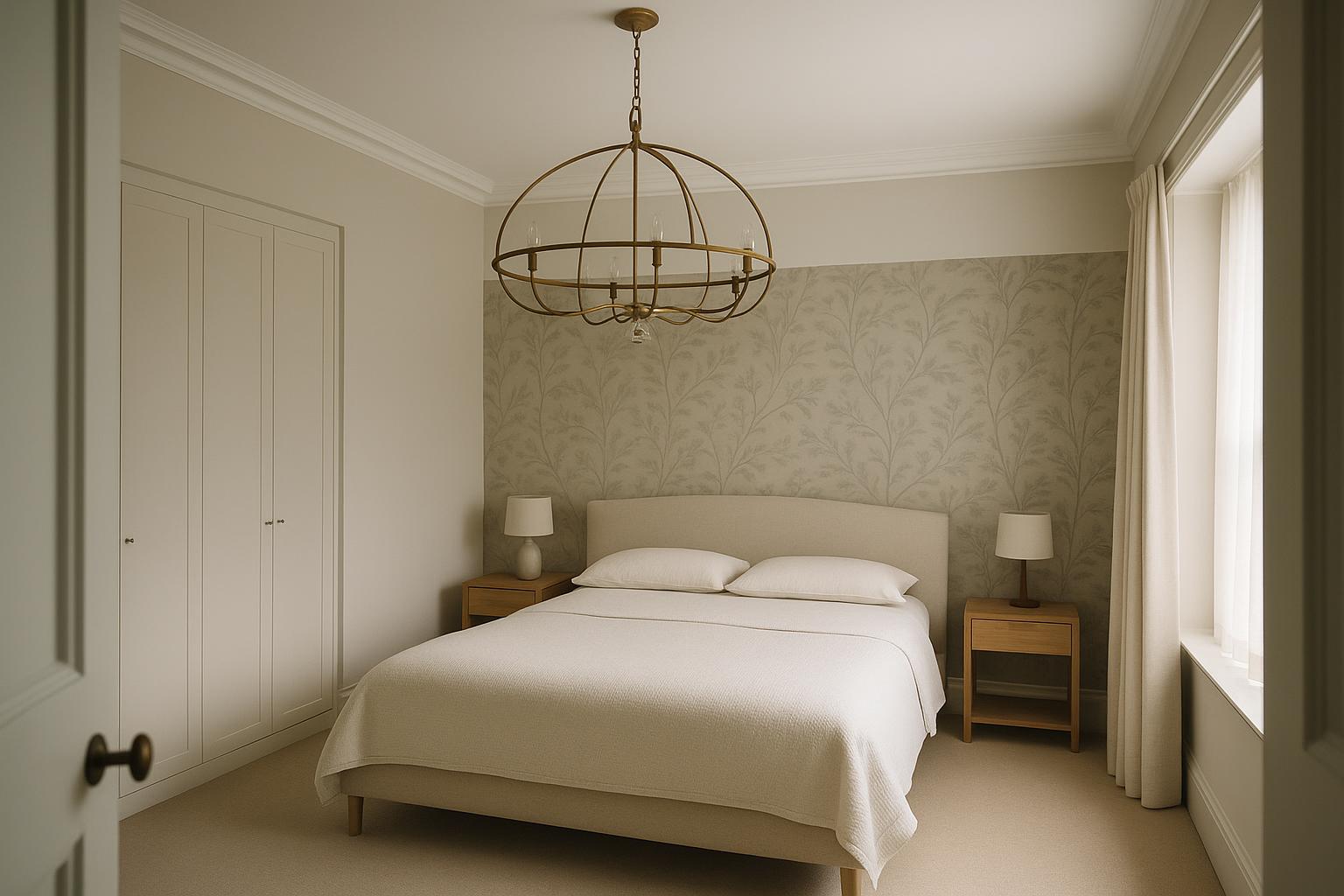
Review every available photograph, including close views of the canopy and suspension. A solid ring or broad shade may provide a strong anchor in a large entrance hall but appear heavy across a narrow stair opening. Clear glass and fine metalwork preserve longer sightlines, although they can reveal lamps, internal wiring and dust more readily.
This is also where the choice between one long pendant and a cascading composition becomes clearer. A single fitting creates a defined focal point. A multi-level pendant spreads interest through the height, but each element must look deliberate from the landing as well as from below.
To complement this topic, you can also read Survey Your Home Before Choosing Light Fittings.
Translate the product dimensions carefully
Manufacturers do not always present dimensions in the same way. Overall height may include the canopy and suspension, while fitting height may refer only to the decorative body. An adjustable drop might mean a cable shortened during installation, a telescopic arrangement or a choice of fixed rod lengths. Do not treat these descriptions as interchangeable.
Before adding a product to the shortlist, confirm:
- the complete minimum and maximum drop, where stated;
- the height and widest point of the decorative body;
- the dimensions of the ceiling plate or canopy;
- whether cables, chains or rods can be adjusted;
- the fitting weight and stated suspension method;
- whether shades or decorative components require assembly.
If a critical measurement is missing, request it before ordering. Scaling a fitting from furniture or windows in a styled photograph is unreliable.
Decide what lighting job the fitting must do
high ceiling lighting may be decorative, functional or both. Decide whether the fitting must illuminate the floor below, brighten the upper part of the void or mainly act as a visual feature. A sculptural design with modest output may still work well when wall lights, landing lights or downlights provide the practical layers.

Check the specified lamp type or integrated light source, the number of light points and any stated dimming compatibility. If dimming is important, the fitting, lamps and control must be compatible with one another. For integrated LED products, review the information supplied about the light source and servicing rather than assuming it can be treated like a replaceable bulb.
Also consider exposed lamps at eye level from the landing. A fitting that feels comfortably bright from below can produce glare when viewed directly from an upper floor.
Consider materials in daylight and after dark
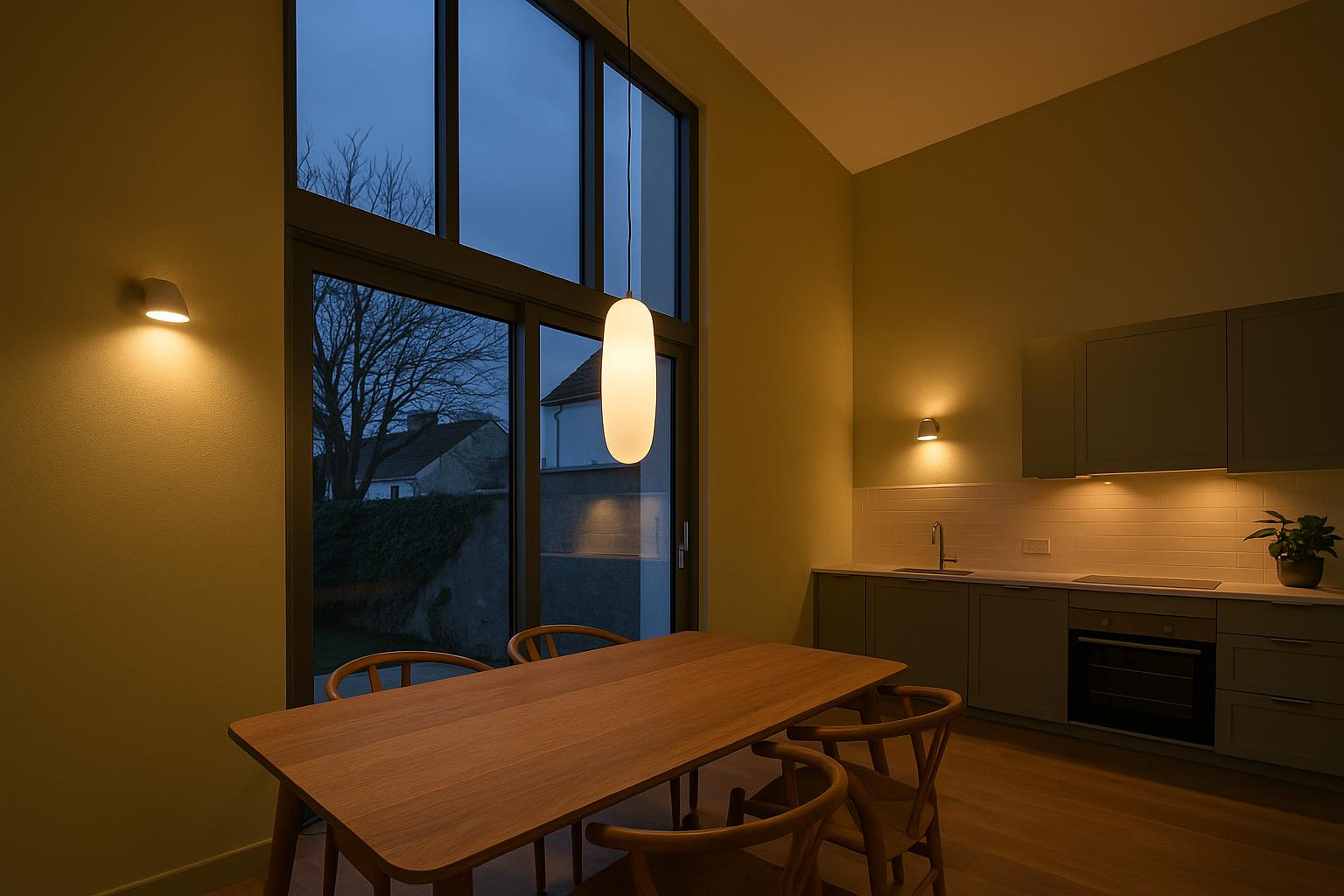
Overcast daylight from a high window can make clear glass recede and dark metalwork stand out. On darker winter afternoons, smoked glass or dense shades may read as a heavier shape. After dark, reflections can multiply across glazing, mirrors and polished surfaces.
In the same direction, Place Pendant Lights Around the Room, Not Just the Ceiling offers useful ideas for choosing home lighting more confidently.
Look at the backgrounds behind the proposed fitting from each level. Opal glass generally gives a more defined, softly luminous form, while clear glass leaves more of the lamp and internal construction visible. Matt finishes tend to produce a quieter outline than highly polished metal. These are visual tendencies rather than guarantees, so use product photographs showing both lit and unlit views where available.
Materials also affect upkeep. Numerous glass drops, open bowls and closely spaced globes require more attention than a simpler arrangement, particularly in a kitchen-diner where residue may settle on exposed surfaces.
Plan installation and maintenance together
The method used to fit the light may also be needed later for cleaning, lamp replacement or servicing. An ordinary household ladder may not provide safe access over an open staircase or beneath a vaulted ceiling. Discuss the location with a Registered Electrical Contractor before confirming the order, especially if access equipment or additional structural support may be required.
Provide the installer with the product weight, canopy size, assembly instructions and suspension details. The existing electrical point may not be in the visual centre of the void, and its support should not be assumed suitable for a heavier fitting. These matters need assessment on site rather than a last-minute solution on installation day.
Maintenance should influence the design choice. Accessible shades, replaceable lamps and fewer small components can be valuable in a hard-to-reach position. If professional access will be required each time, factor that into the long-term decision.
For more consistent lighting throughout the home, the article Pendant Lights: Your Ceiling's Favorite Accessory! may also be helpful.
Check the route from delivery van to ceiling
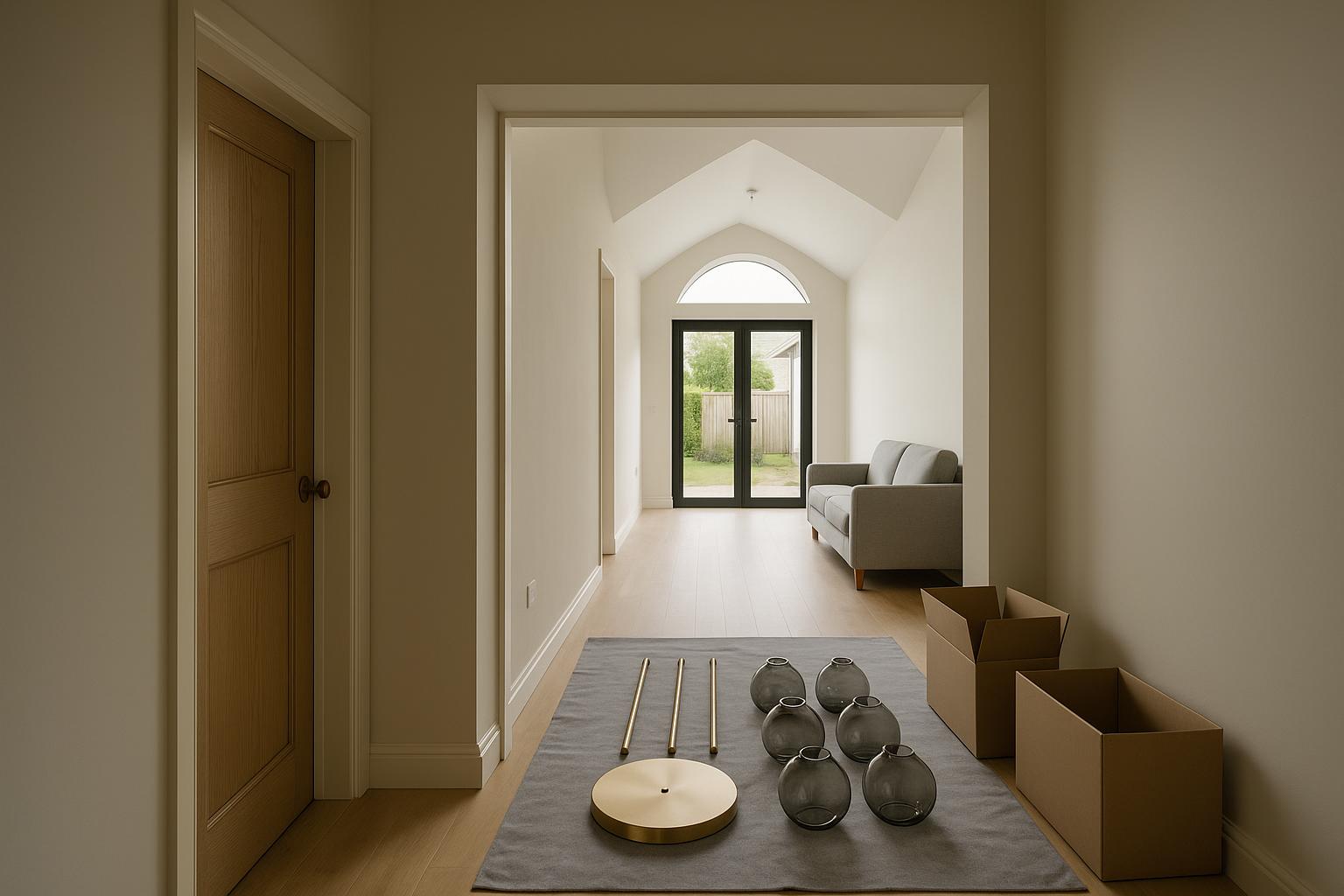
A generous entrance void does not guarantee an easy delivery route. Measure narrow doorways, tight turns, stair widths and the space available for unpacking. A fitting assembled on the floor may be wider than its packaging, while fragile glass components may need a clean, protected area before installation.
Check what arrives assembled and what must be put together on site. Coordinate delivery and installation so boxes are not opened, moved repeatedly or left in an active building area. Inspect the contents in line with the retailer's instructions while keeping packaging until you are satisfied that the order is complete.
Compare the shortlist against a written brief
A useful brief can fit on one page. Record the usable width, intended top and bottom points, main viewing levels, preferred visual weight, light source requirements, finish and maintenance constraints. Add any access or delivery issues identified by your electrician.

Use that sheet to compare two or three products rather than continuing to collect inspiration images. If you intend to buy long-drop lights online in Ireland, you can browse the long-drop lights collection and check each candidate against the same measurements and practical requirements.
The right fitting should look composed from the hallway, stairs and landing without creating avoidable problems above or below. Once the drop, width, light source and access plan are settled, style becomes a much easier decision.