Good boundary lighting reveals the parts of a garden that people use while leaving unnecessary brightness out of the...
- There are no more items in your cart
- Shipping
- Total €0.00
Place Pendant Lights Around the Room, Not Just the Ceiling
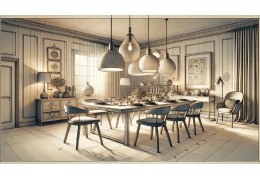
A search for pendant lights ideas tends to produce plenty of attractive fittings and very little help with the harder decision: where the light should actually sit. A pendant occupies part of the room, not just a point on the ceiling. Its width, drop and position affect views, movement and the usefulness of the surface below.
That becomes obvious when comparing a Dublin apartment with a dormer bungalow or a Georgian terrace. The same fitting may feel neat in one room, oppressive in another and unexpectedly small beneath a high ceiling. Before considering colour or finish, work from the furniture, the routes through the room and the places from which the pendant will be seen.
Start with the room below
A ceiling point is not necessarily the natural centre of a room. Dining tables move, kitchen islands may sit off-axis and sitting rooms are often arranged around a fireplace, window or television rather than the middle of the floor. Positioning a pendant solely from the ceiling plan can leave it unrelated to everything beneath it.

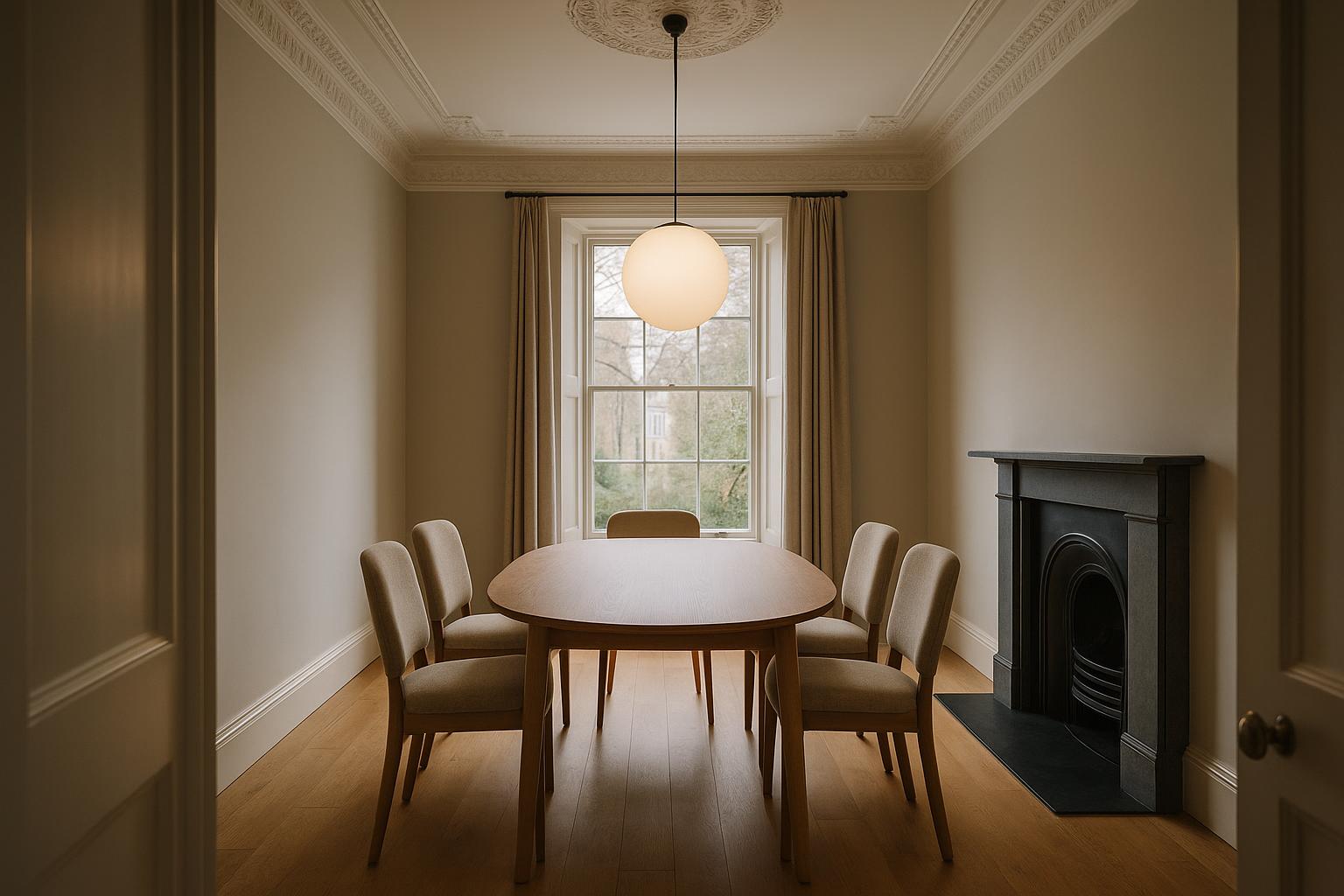
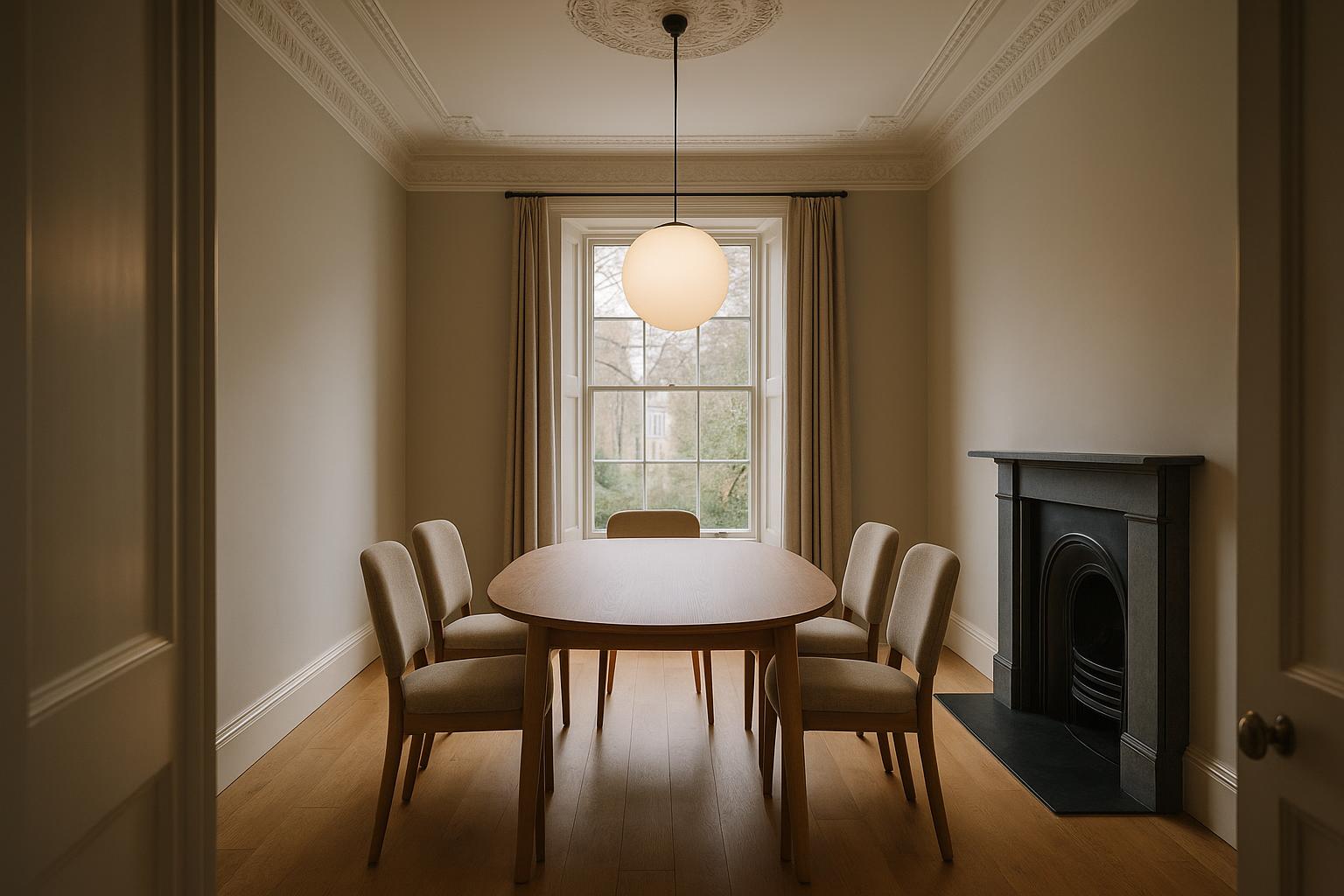
Identify the object or area the fitting is meant to serve. Over a dining table, the table provides a firm visual anchor. Above an island, the working surface sets the line. In a hallway or landing, where there may be no furniture below, the priority is safe passage and comfortable headroom.
It also helps to give the fitting one main job. A pendant might light a worktop, define a dining area or add a softer evening glow. Expecting one decorative light to illuminate an entire open-plan room usually leads to excessive brightness at the centre and dull edges elsewhere.
Protect the views through the room
Look at the proposed position from doorways, seats and adjoining rooms. In a kitchen-diner, check the view from the dining table towards the garden and from the sitting area back towards the kitchen. A broad opaque shade can give an island welcome presence, but it can also block glazing or make the worktop feel like a barrier.
Clear glass, open frames and shallow shades carry less visual weight, although each produces a different quality of light. The answer is not always to choose the least noticeable fitting. A room may benefit from a strong focal point, provided it does not interrupt the view that makes the space work.
Seated viewpoints are especially important. A lamp hidden from someone standing at the island may be directly in the eyeline of a person on a nearby sofa. Check the proposed drop while sitting as well as standing, and consider a diffuser or enclosed shade if the lamp remains exposed.
Let the island determine the arrangement
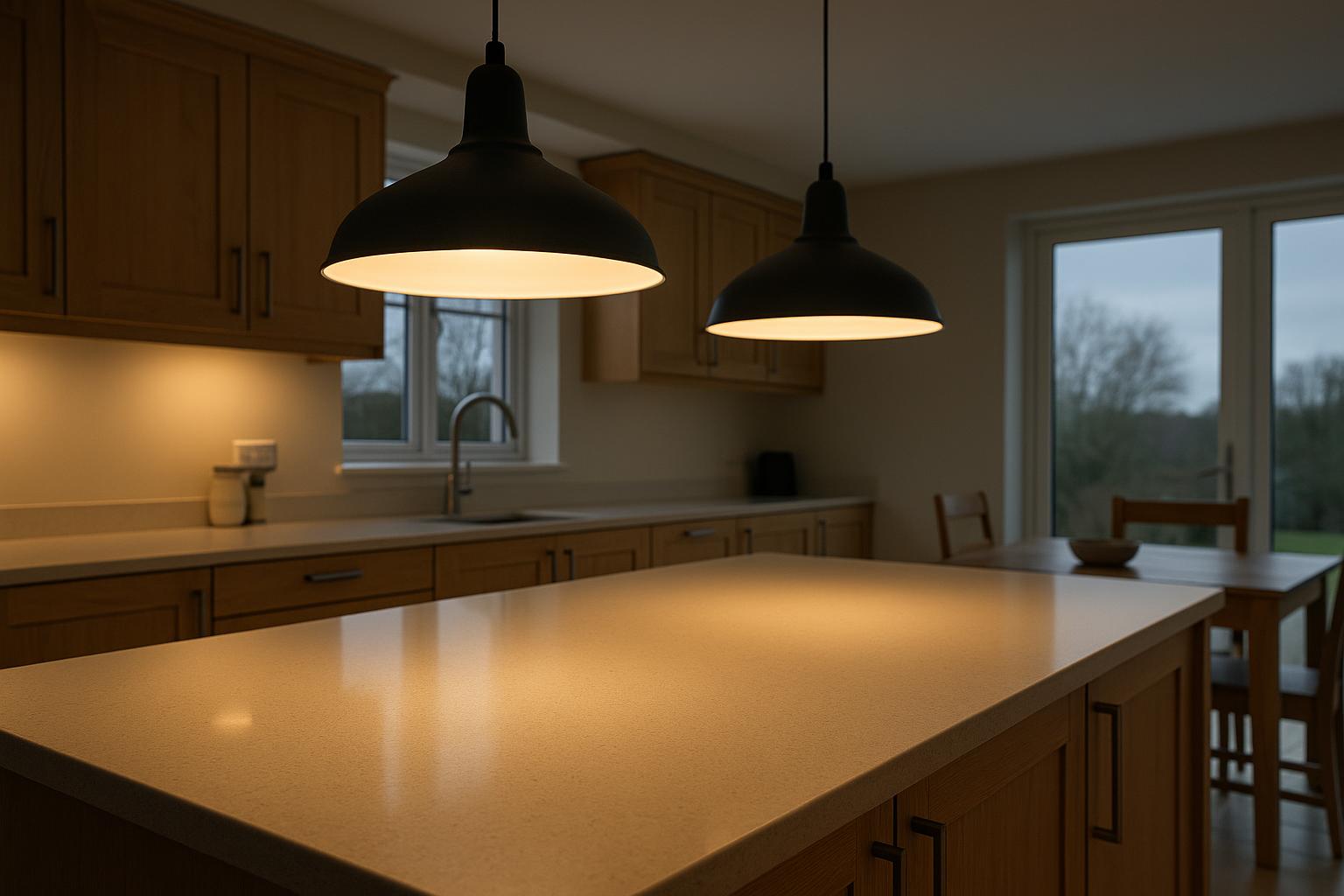
Island lighting should follow the worktop rather than the room around it. This is useful in extensions where old and new walls are not perfectly square. Aligning drop lights with the island will generally look calmer than forcing them to follow a ceiling line that is only noticeable on a plan.
To complement this topic, you can also read Pendant Lights: Your Ceiling's Favorite Accessory!.
Start by considering the length and visual weight of the island. One substantial pendant can suit a compact worktop, while a longer island may take two or three smaller fittings or a single linear design. More pendants do not automatically provide a better result. Each additional shade adds cables, ceiling connections and another object within the view.
Mark the centre and the proposed outer positions with removable tape. Check that the end fittings remain comfortably inside the visual boundary of the worktop. Then look for overlaps with a tall tap, raised breakfast bar or extractor. A mathematically even arrangement can still appear crowded from the dining side.
Test the fitting at full size
Product photographs rarely communicate scale reliably. Make a simple paper or cardboard template using the fitting's stated width and depth, then suspend it at the proposed height. For a cluster, represent the whole composition rather than one individual shade.
Leave the template in place for a day if possible. Walk past it, sit beneath it and view it in daylight and after dark. Pull out dining chairs, open nearby cupboard doors and consider how people use the surface. This catches problems that are easy to miss when studying measurements on a screen.
Low ceilings do not always require a tiny fitting. A wide, shallow pendant may feel more settled than a narrow shade with a long suspension. In a tall period room, the opposite issue arises: a fitting that looks generous online can disappear into the upper part of the space. Furniture below still needs to anchor it, so size should be judged as part of the full room rather than against ceiling height alone.
Choose a shade for the light you need
Shade shape changes where the light goes. An opaque metal shade directs attention towards the surface below and limits sideways brightness. Clear glass lets more light remain visible around the room but can expose the lamp and create glare. Opal glass and other diffused materials generally produce a softer effect, which may be more comfortable over a table or beside a sitting area.

Consider the unlit fitting too. During much of the day, ceiling pendants act as architectural objects. Reflective glass or metal can catch weak daylight and add liveliness to a darker room. Matt finishes appear more solid and subdued. Matching handles, taps and every light fitting exactly is unnecessary; a controlled contrast often looks less contrived.
Maintenance matters in kitchens. Intricate open fittings and clusters have more surfaces on which dust and cooking residue can settle. Before choosing a highly detailed design, consider whether every part can be reached and cleaned without difficulty.
Give pendants some support
A pendant should not be left to carry the whole lighting scheme. Strong light over an island can make the surrounding cupboards, utility route and corners appear darker once daylight fades. In a dining area, a bright ceiling light without softer background lighting can flatten the room rather than make it feel welcoming.
Build a separate layer with suitable downlights, spotlights, wall lights, concealed kitchen lighting or portable lamps. Separate controls are useful because the room can then change with the task. Preparation, homework and cleaning need a different balance from dinner or a quiet evening.
If dimming is planned, confirm that the fitting, lamp and control are compatible. Dimming can adjust brightness, but it cannot correct an uncomfortable exposed lamp or a pendant hung in the wrong eyeline.
Treat difficult ceilings individually
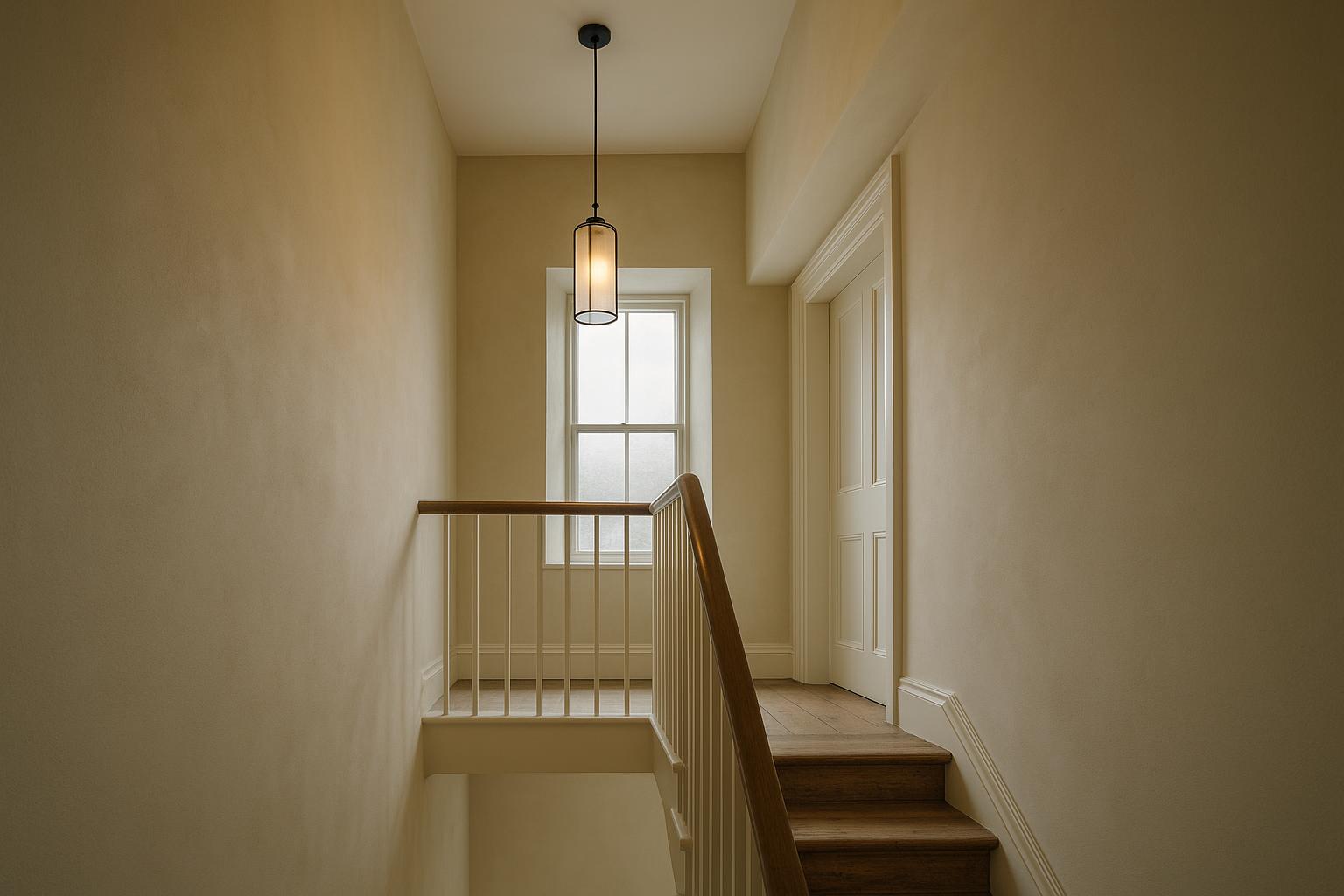
Sloping attic ceilings, beams and stair voids need more than a standard central arrangement. In a converted attic, the highest roof point may not sit over the most useful furniture position. Judge the pendant against the floor and furnishings, and check that the selected ceiling connection is suitable for the intended surface and angle.

A cottage with beams may work best with a hanging light over a fixed table while the main route remains clear. In a long townhouse room, two modest fittings can relate better to the proportions than one oversized centrepiece. Neither solution needs rigid symmetry if doors, fireplaces or furniture create a different visual balance.
- Stairwells: inspect the fitting from the lower hall, stairs and upper landing, checking clearance at every level.
- Narrow hallways: favour controlled width and a form that does not seem to press into the route.
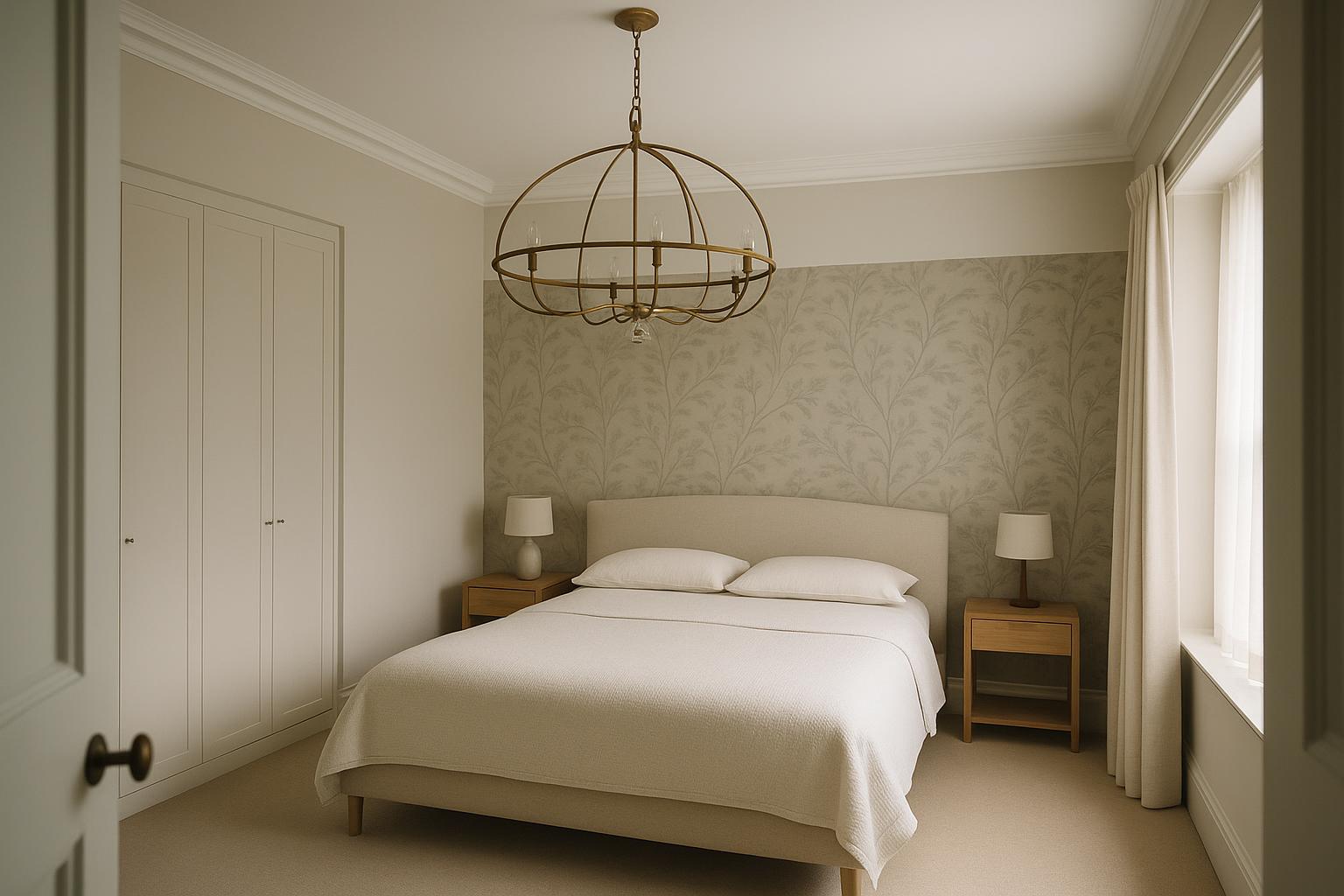
- Bedrooms: view the lamp from the bed and avoid a harsh exposed light directly overhead.
- Multi-use rooms: anchor pendants to fixed elements so movable furniture can still be rearranged.
Review the practical details
Before ordering, compare the full dimensions with the template and confirm the available suspension adjustment. Check whether the product uses replaceable lamps or an integrated light source, what is included and whether the fitting supports any planned dimming. Product instructions should take priority over assumptions based on appearance.
Make one final edit to the scheme. Three pendant light fittings may look better as two, or a complex cluster may be less effective than one well-scaled shade. Removing an unnecessary fitting can improve the view and reduce visual clutter without weakening the lighting plan.
You can browse pendant lights in a range of forms and scales, then check the shortlisted dimensions against the room template. Keep the decision tied to the furniture, movement and background lighting rather than choosing a ceiling light in isolation.
Follow the manufacturer's installation instructions. Any new fixed wiring or alteration to a ceiling point should be handled by an appropriately registered electrical contractor. Careful placement is what makes the finished pendant look effortless: it belongs to the room below, leaves important views open and provides useful light where it is needed.