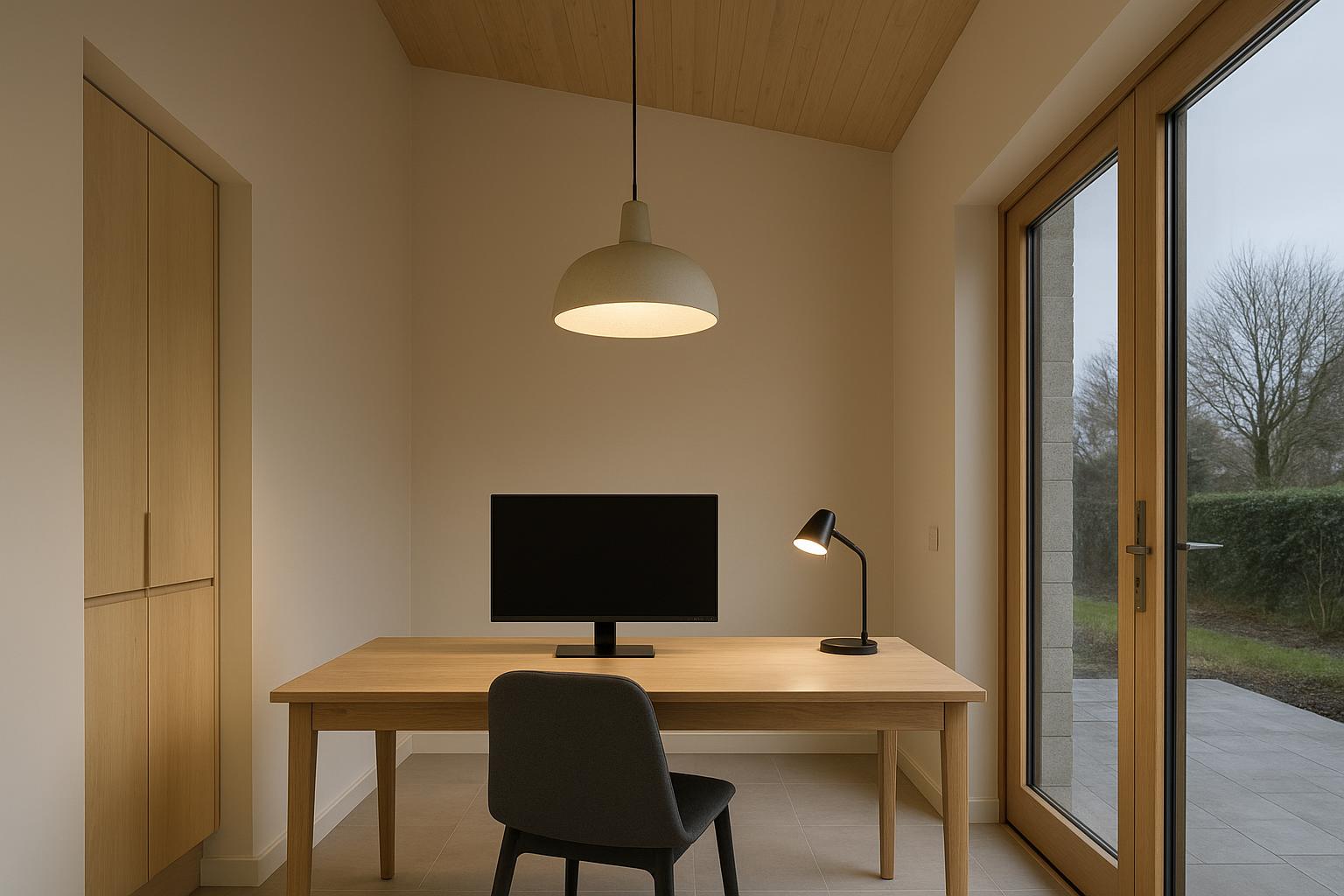
A practical way to light a home office from the desk outwards, balancing paperwork, screens, video calls and changing...
- There are no more items in your cart
- Shipping
- Total €0.00
Where Light Should Fall in a Home Office
Begin with the working day, not the ceiling
Home office lighting should follow the work being done. A person who spends most of the day on a laptop needs a different arrangement from someone reviewing printed plans, handling samples or writing notes beside two monitors. Before looking at fittings, list the tasks that occupy the desk and the hours when they usually happen.

Then mark the places that need light. These may include the keyboard, a notebook beside it, shelves used throughout the day and the wall behind the monitor. The aim is not to make every surface equally bright. It is to avoid uncomfortable jumps between a luminous screen, a dark desk and an unlit room.
Existing sockets and switches also belong in this early assessment. An adjustable lamp is of little use if its cable has to cross a walkway, while a dimmer beside the door may not be convenient once somebody is seated. A quick sketch of the desk, window, sockets and ceiling point can prevent an attractive but impractical purchase.
Use the switched-off screen to expose glare
A black monitor is an effective test surface. With the screen switched off, sit in the normal working position and look for reflected windows, exposed lamps and bright ceiling fittings. Repeat the check in the morning and late afternoon. Reflections can move considerably as the sun drops, even when the day appears overcast.
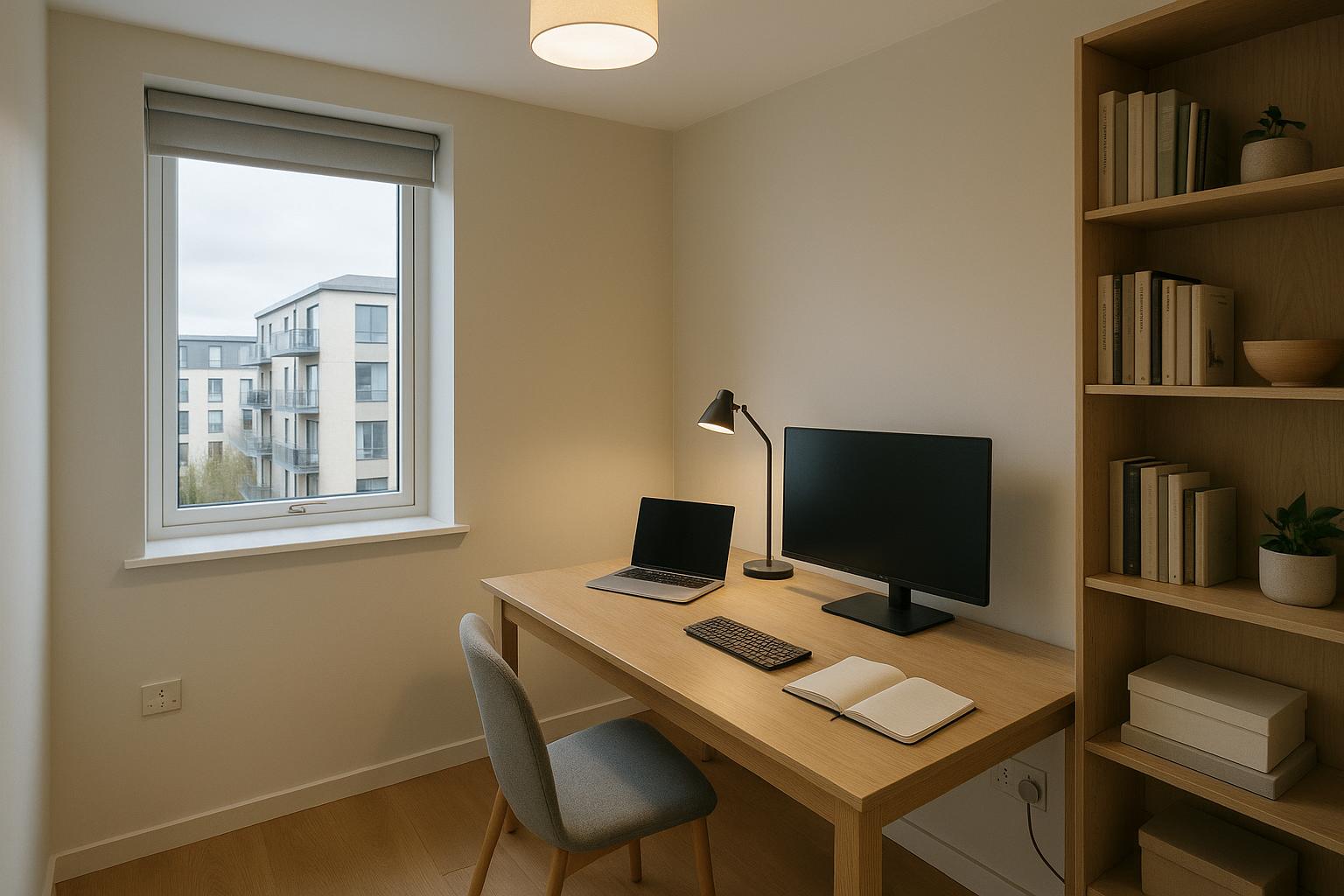
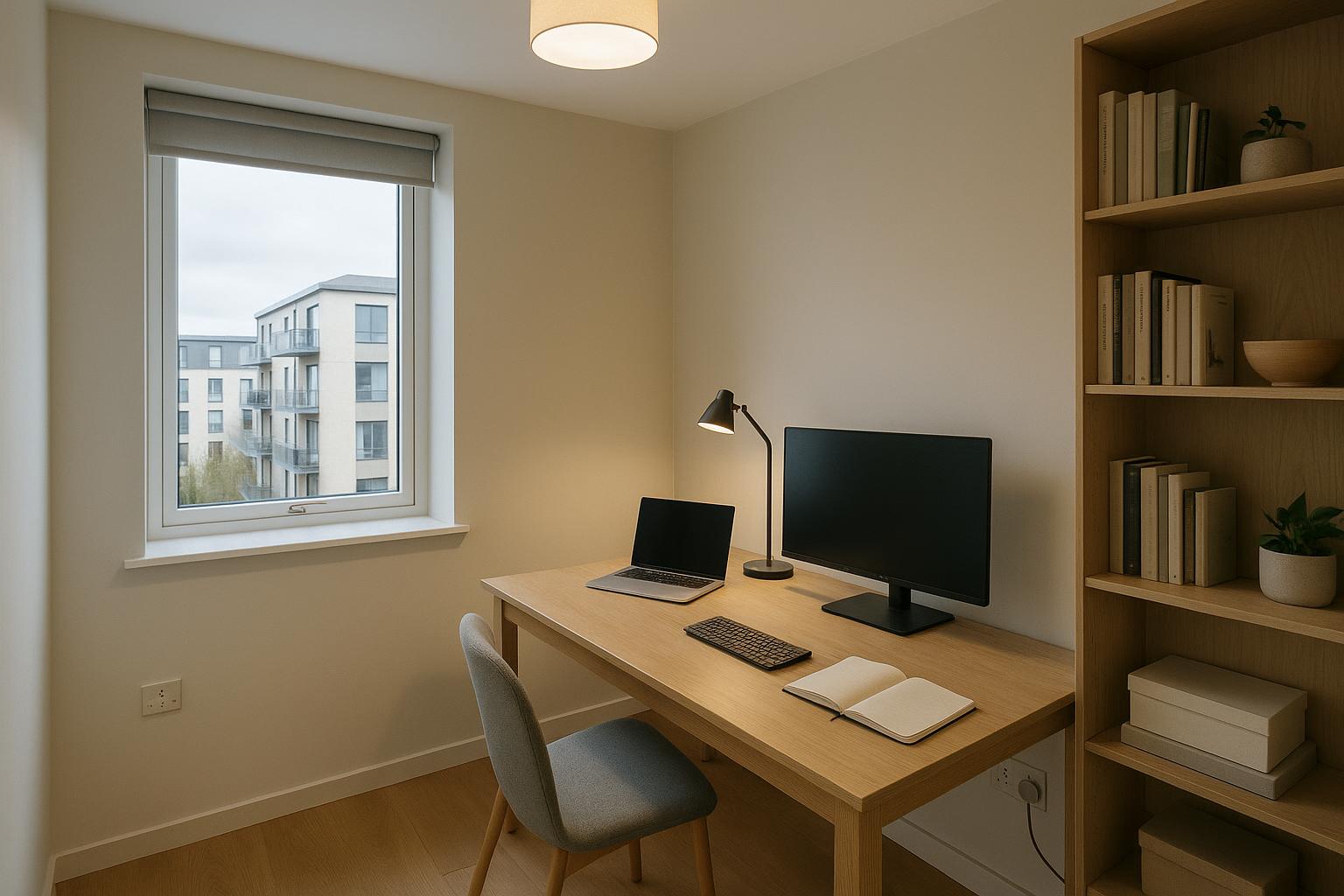
A desk set roughly at right angles to the main window is often easier to manage than one facing directly towards or away from it. Side light can reach the desk without placing a bright window in the user’s sightline or reflecting squarely in the screen. The room may dictate another arrangement, particularly in a compact Dublin apartment or a converted attic with roof windows.
Where the desk cannot move, use a blind to reduce the brightest part of the window rather than shutting out daylight completely. A translucent or adjustable blind offers more control than a heavy curtain during office hours. Check the real monitor in position before fixing shelves, ordering a pendant or moving a ceiling point.
Give paperwork its own light
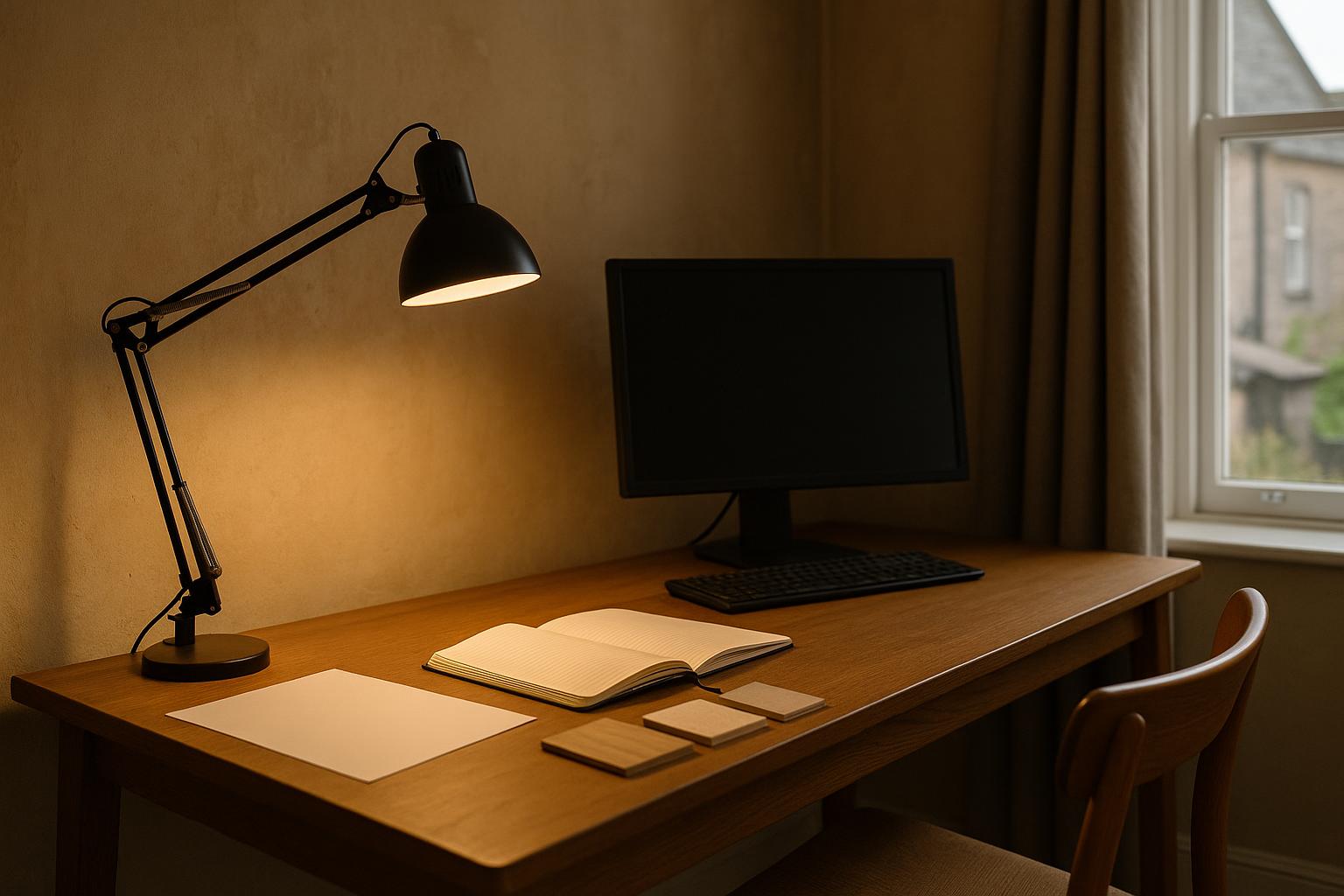
A screen produces light; paper only reflects it. This is why a room that feels adequate for email can become tiring when invoices, drawings or handwritten notes are added. A task lamp should place light across the working area without showing a bright source in the eyes or monitor.

For writing, position the lamp on the side opposite the writing hand. A right-handed user will usually cast fewer shadows with the lamp on the left, while a left-handed user will generally benefit from the reverse. The shade should sit forward enough to reach the page but below the direct line of sight.
To complement this topic, you can also read Keep the Light at the Garden Edge.
Desk depth matters as much as lamp style. On a shallow desk, a large base may take up the space needed for a notebook or keyboard. A clamp lamp or adjustable wall light can preserve the work surface, provided the desk edge or wall is suitable and the fitting is installed as instructed. Check that the arm can clear the monitor and remain stable when extended.
Light appearance deserves attention when paper, fabric or finishes are part of the job. A source around 3000K will look warmer, while 4000K has a cleaner, more neutral appearance. Neither figure alone guarantees good colour rendering. If colour decisions are important, compare the stated colour rendering information as well as colour temperature.
Let the ceiling fitting support the room
Office ceiling lights are best treated as general room lighting rather than the sole source for detailed work. They should make shelving, floor space and storage easy to use while the desk lamp handles the concentrated task. This division also allows the room to remain comfortable when the computer is off.

In a box room or dormer bungalow with a ceiling near 2.4 metres, a diffused flush or semi-flush fitting keeps visual clutter overhead to a minimum. A bare, concentrated source directly above the chair can cast shadows onto the desk and may appear in the screen. A diffuser or shade that conceals the brightest part of the light is generally easier on the eyes.
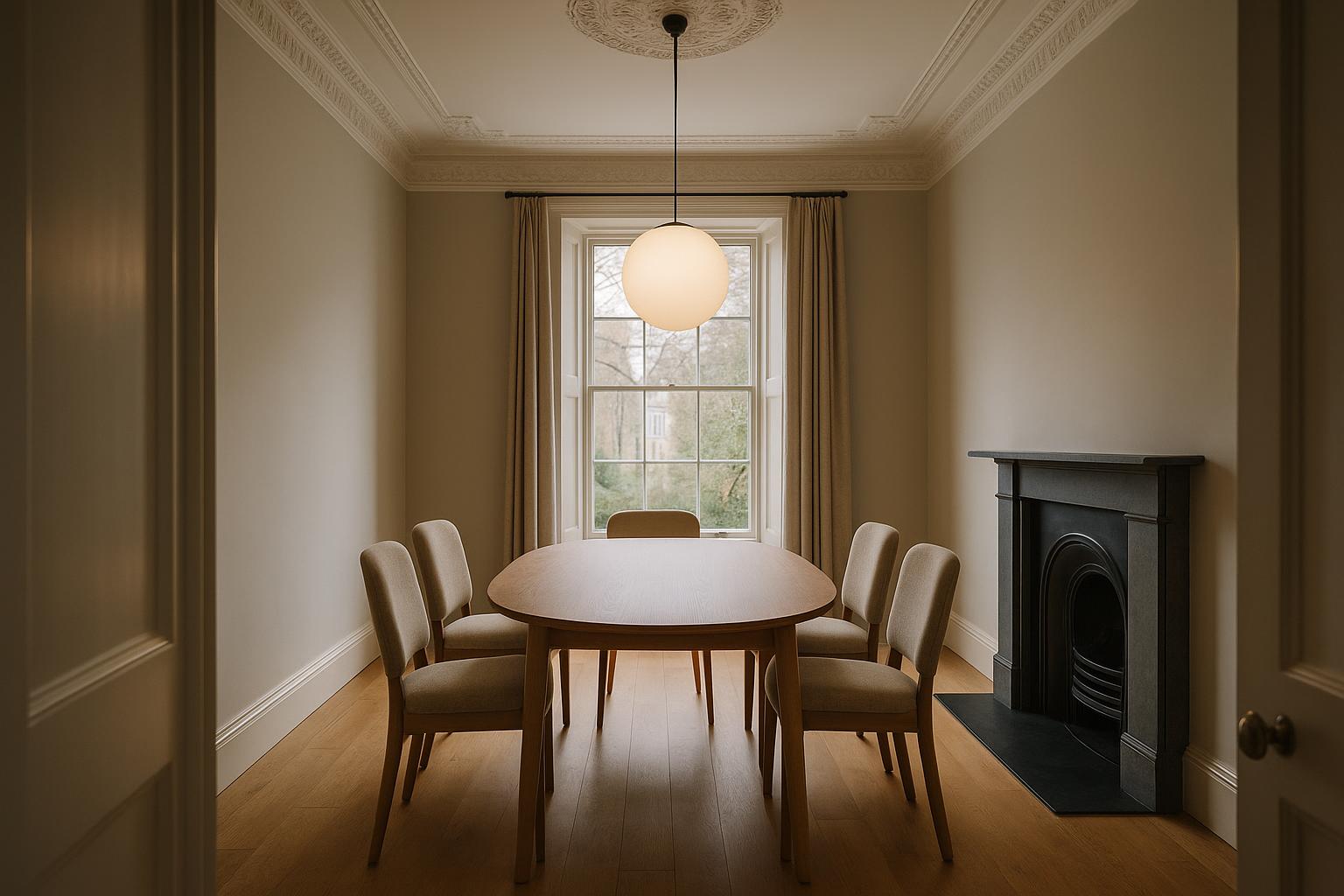
office pendant lights can work in a high-ceilinged room or over a defined workstation in an extension. Their position must be judged while seated, not only while standing at the doorway. The bottom of the fitting should stay clear of the monitor sightline, open doors and normal circulation. Before ordering, suspend a piece of card cut to the proposed width at the intended height; this simple check reveals whether the fitting feels intrusive.
Create a separate setting for video calls
Video calls add two lighting problems that ordinary desk work does not: the face and the visible background. A ceiling light directly overhead can leave the eye sockets dark, while a window behind the chair can cause the camera to underexpose the face.
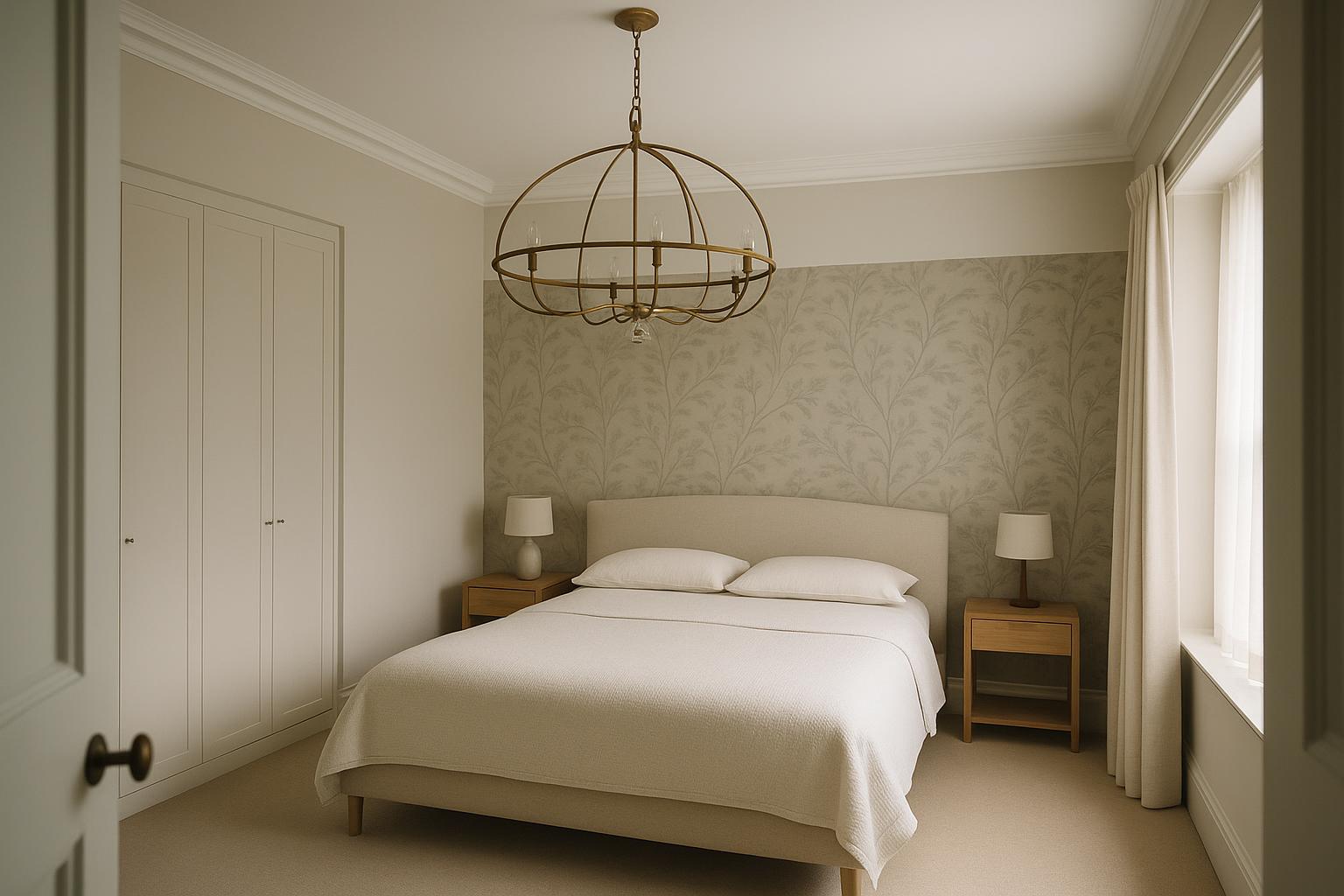
In the same direction, The View from the Pillow: Crystal Lighting for a Calm Bedroom offers useful ideas for choosing home lighting more confidently.
Soft light from in front and slightly to one side is usually more useful. This might come from a shaded desk lamp aimed towards a pale wall, a dedicated low-output light near the monitor or a window with its blind adjusted. The source should not be so bright that it becomes uncomfortable during a long meeting.
Use the actual camera preview rather than relying on how the room looks by eye. Check it at the time meetings normally take place. At 4 pm in winter, a background that appeared balanced at lunchtime may become a dark recess. Moving one existing lamp can often improve the result without adding another fitting.
Keep shared workspaces flexible
A desk at the end of a kitchen-diner or in a sitting room has to disappear visually after work. Separate controls make this easier. The desk lamp can provide concentration during the day, while the room’s usual wall lights or ceiling light take over in the evening.
In a bedroom workspace, local light is especially important because flooding the whole room may disturb somebody resting. A compact lamp with a controlled beam is preferable to an exposed source that spreads light across the bed. On a landing or in an alcove, make sure a chair, cable or projecting lamp arm does not narrow the route through the space.
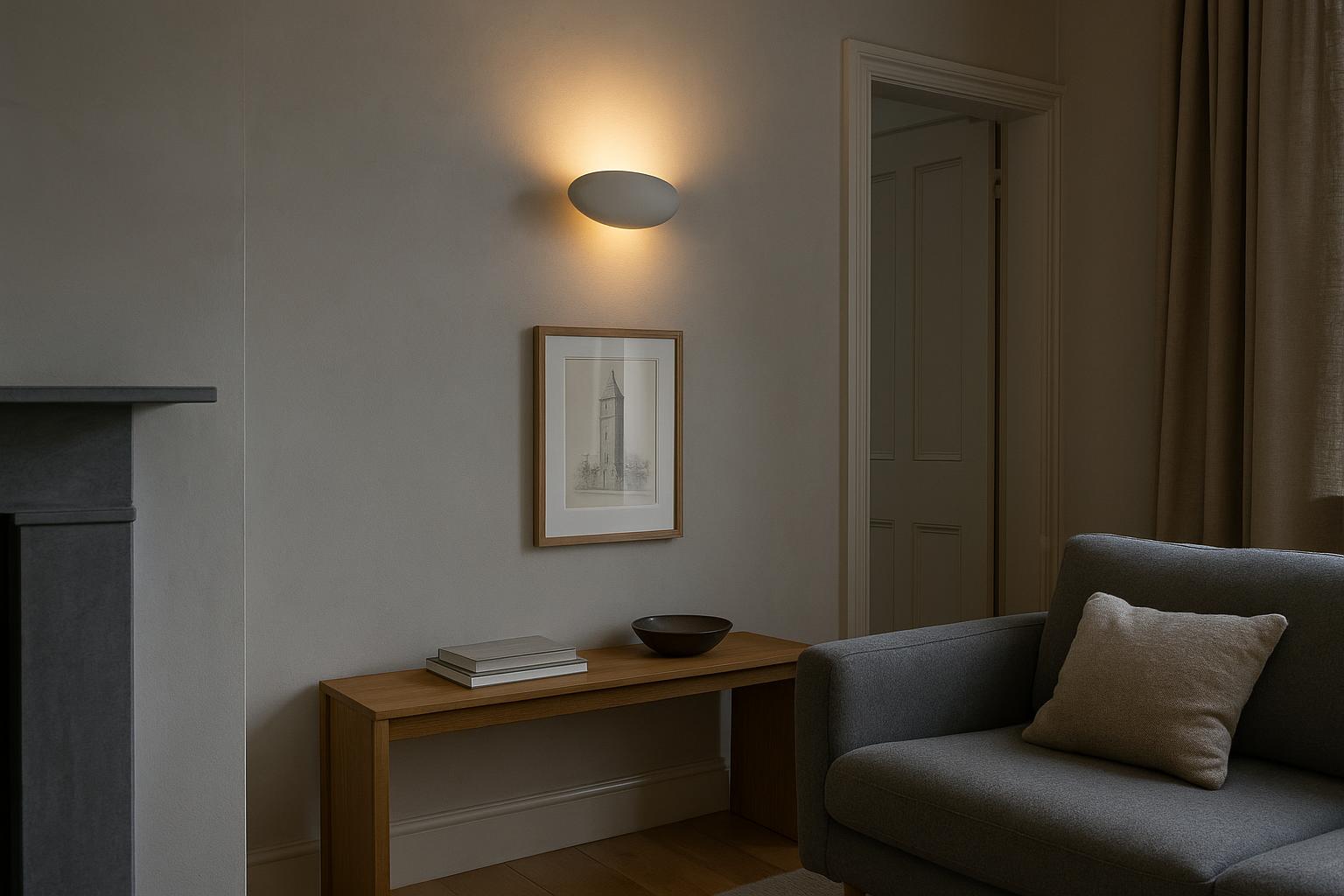
For more consistent lighting throughout the home, the article Read the Wall, Then Choose the Light may also be helpful.
Dimming can extend the usefulness of ambient lighting, but compatibility must be checked across the fitting, light source and control. Do not assume every integrated LED fitting or replacement bulb will work correctly with an existing dimmer. Plug-in lamps also need reachable switches; if adjustment is awkward, the lighting is likely to remain at one setting all day.
Run a working-day trial before choosing fittings
Use the proposed desk position for a full day before committing to fixed lighting. Temporary lamps are sufficient for the trial. The purpose is to identify when and where the room fails, rather than to recreate the finished scheme.
- Morning: check whether window light reaches the screen or shines into the eyes.
- Paperwork: place real documents beside the keyboard and look for shadows from the hand, lamp arm or monitor.
- Afternoon: note when the wall behind the screen becomes too dark compared with the display.
- Video calls: inspect the face and background using the usual camera.
- Evening: confirm that ambient and task lighting can operate independently.
- Physical fit: measure the available desk area, ceiling height, proposed pendant drop and cable route.
The results should leave you with roles to fill rather than a vague requirement for more brightness. You may need a diffused ceiling light for the room, an adjustable lamp for paper and a modest indirect source near the monitor. In a small office, one well-aimed task light and one calm ambient fitting may be enough.
When comparing office lights, check dimensions, adjustability, diffusion and control options against those roles. Appearance still matters, particularly where the office shares another room, but it should not override screen reflections or the usable space on the desk.
Any new ceiling point, fixed wall light, switch position or other fixed wiring should be handled by a Registered Electrical Contractor. A successful home office does not need to look brightly lit at every hour. It needs to keep the work visible, the screen comfortable and the room adaptable when the working day is over.