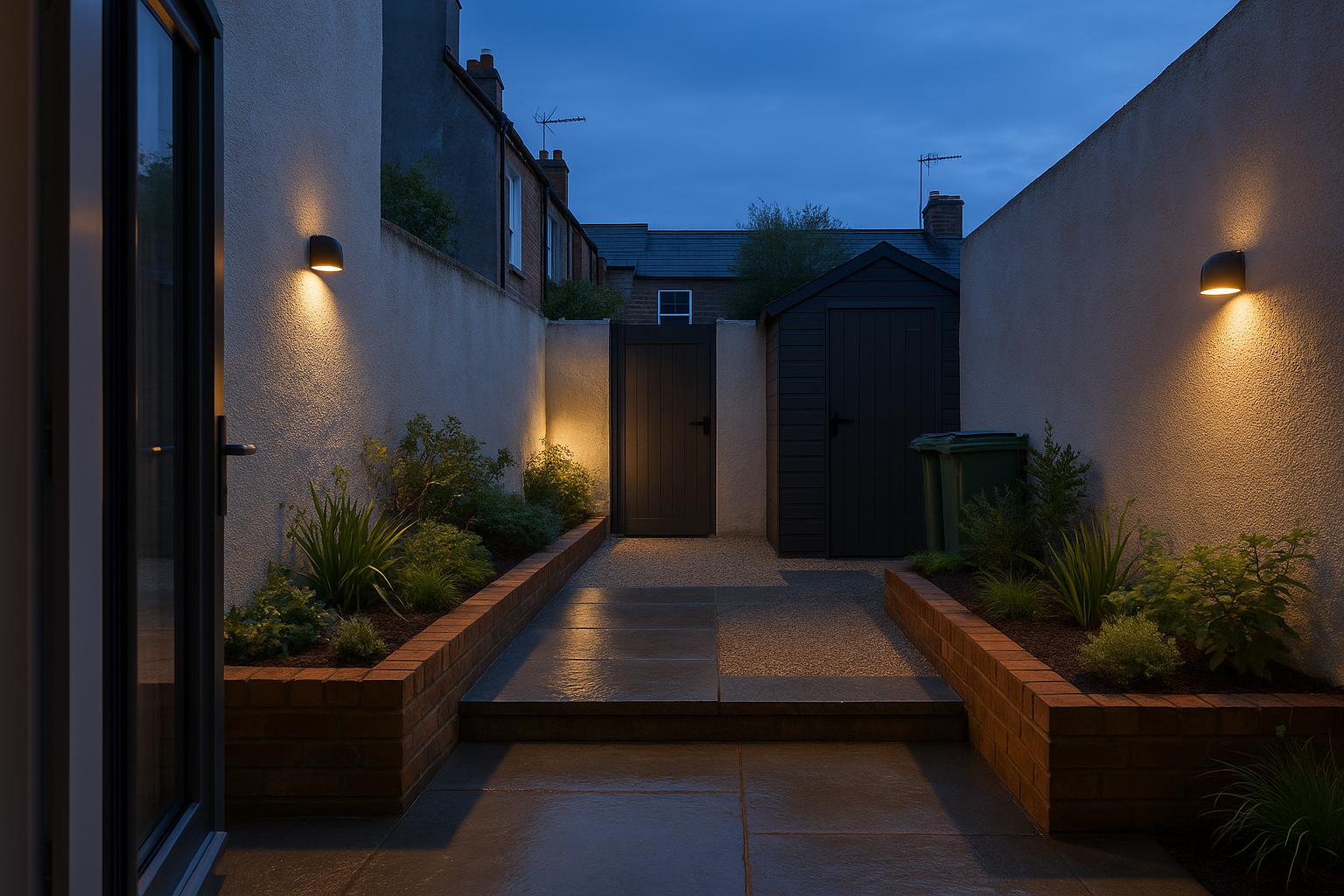
Good boundary lighting reveals the parts of a garden that people use while leaving unnecessary brightness out of the...
- There are no more items in your cart
- Shipping
- Total €0.00
Read the Wall, Then Choose the Light
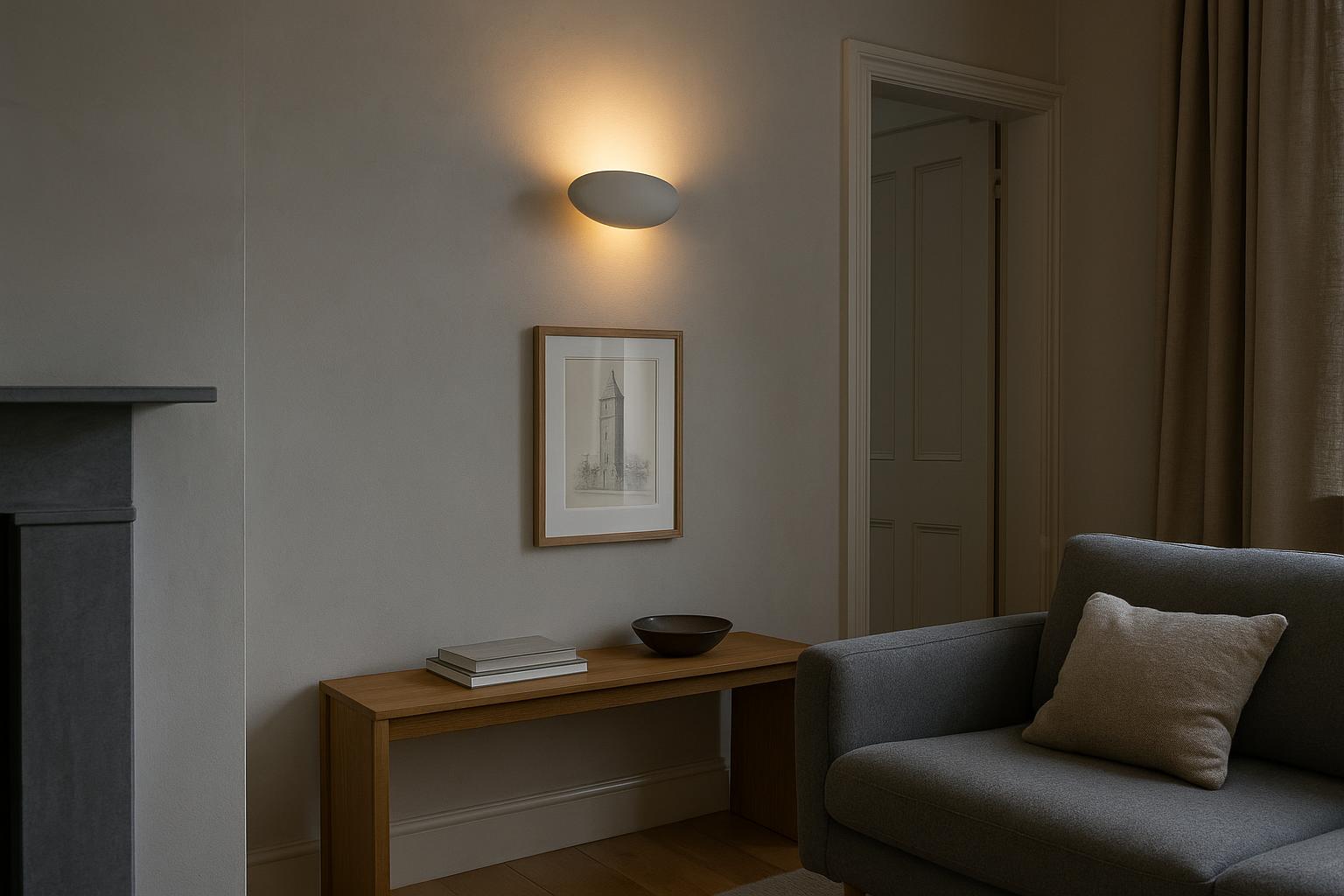
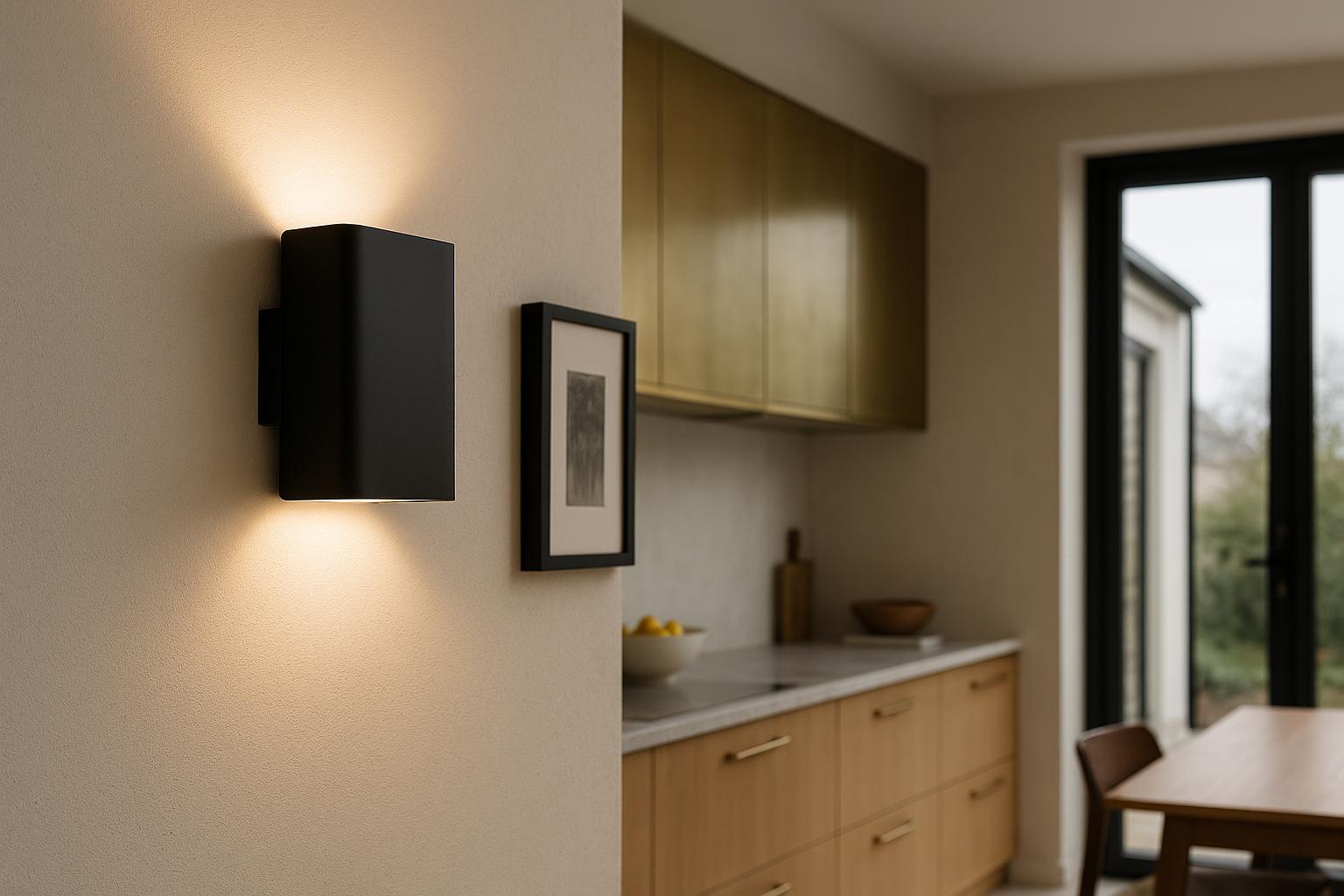
Modern wall lights are often judged from a front-facing product photograph. That view reveals the shape and finish, but not the effect that will matter in the room: how far the fitting projects, where the source is visible and what happens when its beam meets paint, plaster, timber or stone.
The most successful designer modern wall lights are chosen as part of a composition rather than as isolated objects. The wall provides the background, nearby furniture establishes scale, and the usual routes through the room determine whether a fitting feels elegant or intrusive. Work through those relationships before comparing decorative details.
Start with the wall, not the fitting
Give the wall a job. It might need to soften a sitting room after the ceiling light is switched off, guide movement along a landing, provide useful bedside light or bring depth to an open-plan kitchen-diner. A decorative glow and a reading light are not interchangeable, even when both fittings look compact.

Look at what already occupies the elevation. Door frames, switches, radiators, artwork, shelving and curtains can leave less usable space than the room plan suggests. A wall light centred on the remaining patch of plaster may still appear misplaced if it ignores the fireplace, bed or console below it.
Mark the proposed fitting at full size with a paper template. Include the backplate and the complete depth, not just the visible face shown in a catalogue image. This simple test is particularly useful on narrow piers between doors and on walls divided by panelling.
Choose a light distribution for the surface
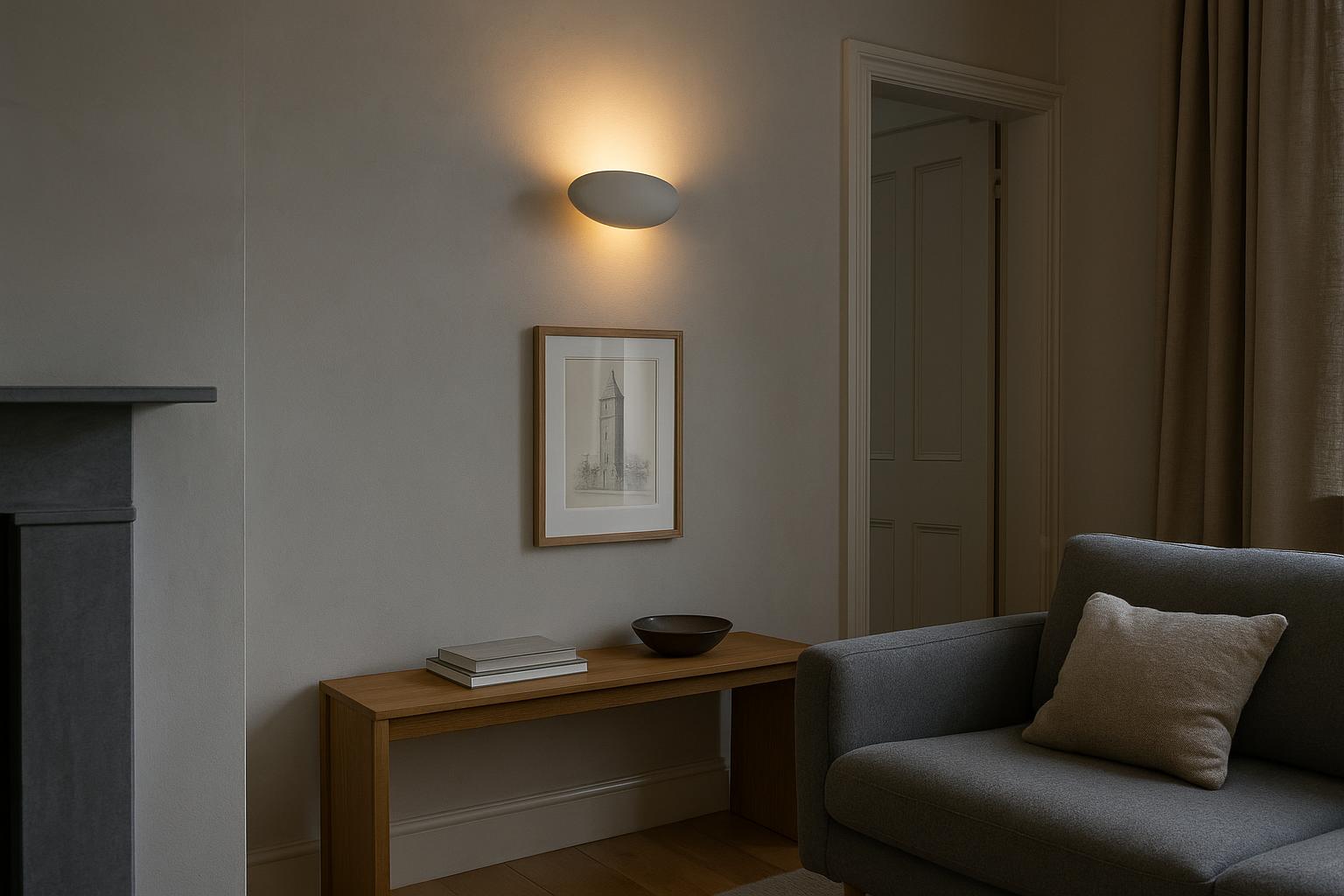
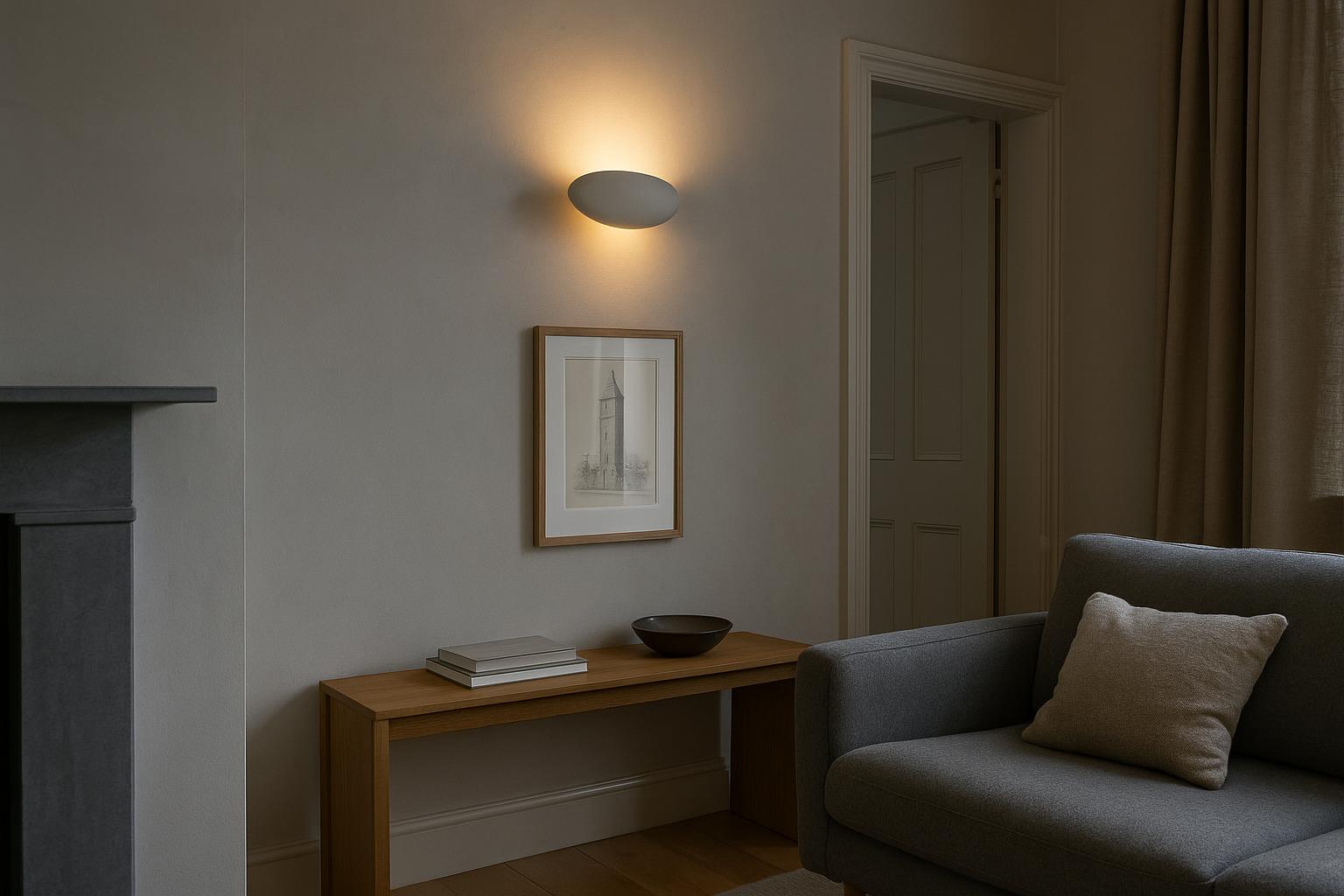
A pale matt wall usually reflects light softly. Deep grey, blue or green paint absorbs more of it, so the beam may look dramatic without adding much ambient light. If the room depends on the wall lights for a useful evening layer, allow for that difference when comparing fittings.
Directional light reveals texture. On original stone, lime plaster or brick, a close grazing beam can pick out joints and irregular edges. It will also make repairs, cable chases and uneven finishing more conspicuous. View the wall in side light during the day before deciding that every variation deserves emphasis.
Up-and-down fittings need clear wall area for both beams to develop. A picture rail, shelf or low ceiling can interrupt the pattern and create a bright strip that was not apparent in the product photograph. Diffused contemporary wall lights are less dependent on an uninterrupted surface, although their luminous face may be more noticeable from across the room.
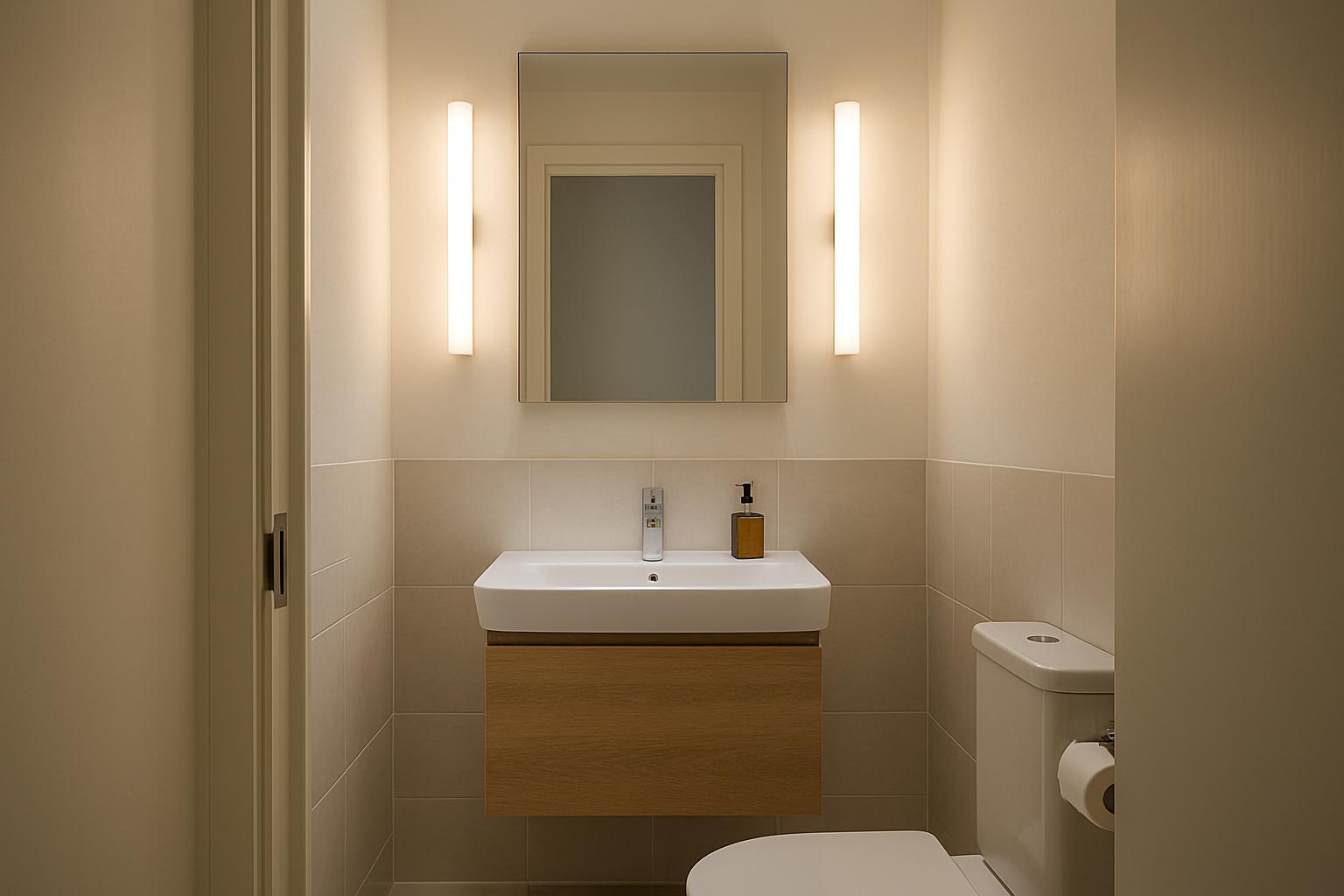
Reflective materials require particular care. Mirrors, polished tiles and glazed pictures can return a sharp image of the source. Check the likely reflection from the doorway and from seated positions, not only while standing directly in front of the wall.
To complement this topic, you can also read A Bathroom Lighting Plan That Works Morning and Night.
Check projection from every approach
Projection has both a physical and visual effect. In a compact Dublin apartment hallway, a deep shade can encroach on the route and catch coats or bags. A shallow disc or folded form may provide the same visual interest while keeping the passage clear. Low-profile minimalist wall lights also tend to sit more comfortably beside closely spaced door frames.
Greater depth can work where the architecture gives it room. A projecting arm beside a built-in seat in a Galway semi-detached house can define that corner and direct light towards a book or table. The same fitting on a stair turn might be awkward when viewed from above or approached at shoulder height.
- Measure depth from the finished wall, including any projecting shade or arm.
- Open nearby doors, cupboards and curtains while the template is in place.
- Walk towards the position from both directions.
- Check the fitting against the wall while seated as well as standing.
Do not assume that a large room needs a large wall light. The relevant scale is often the section of wall available around the fitting, not the total floor area.
Assess glare from real viewing positions
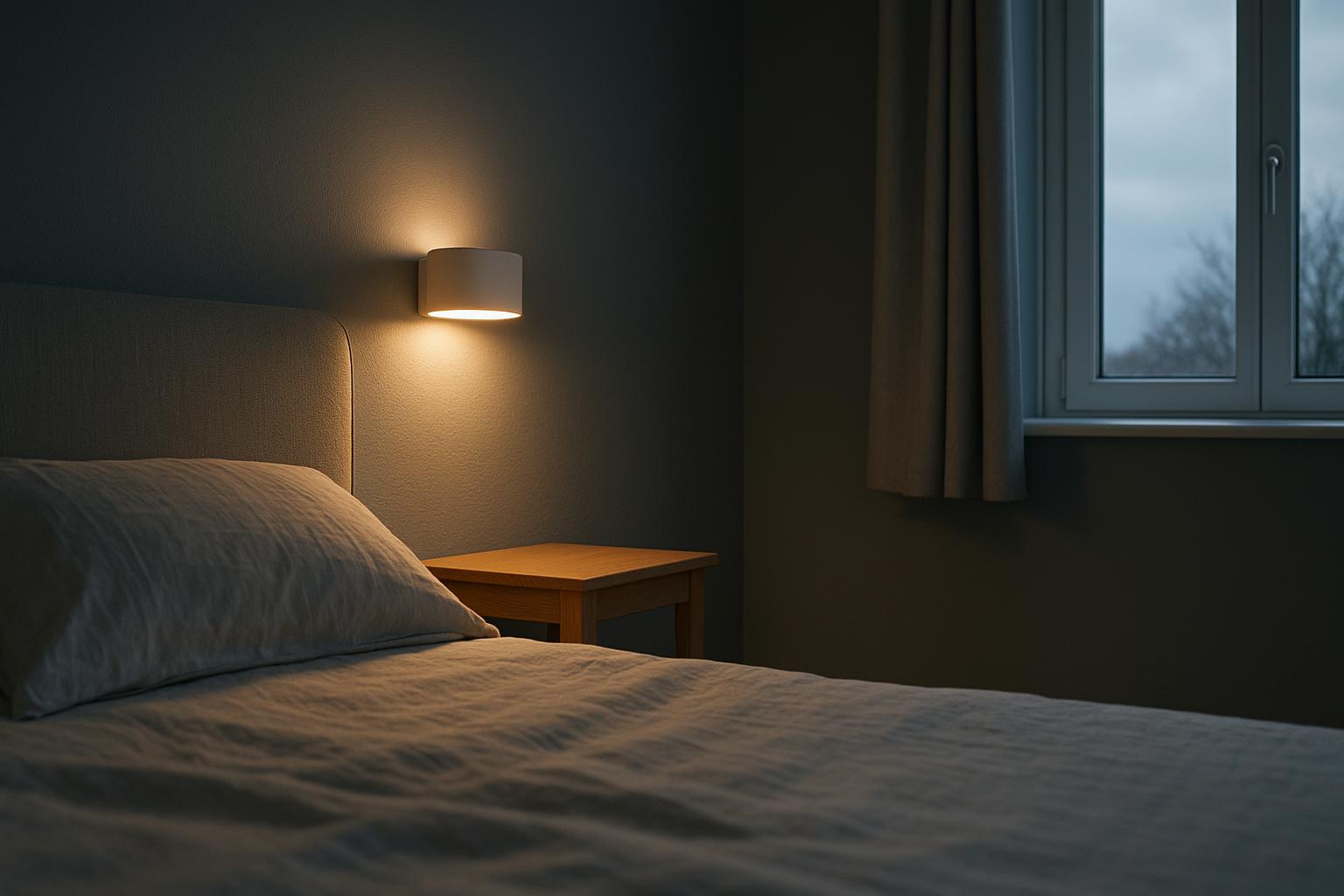
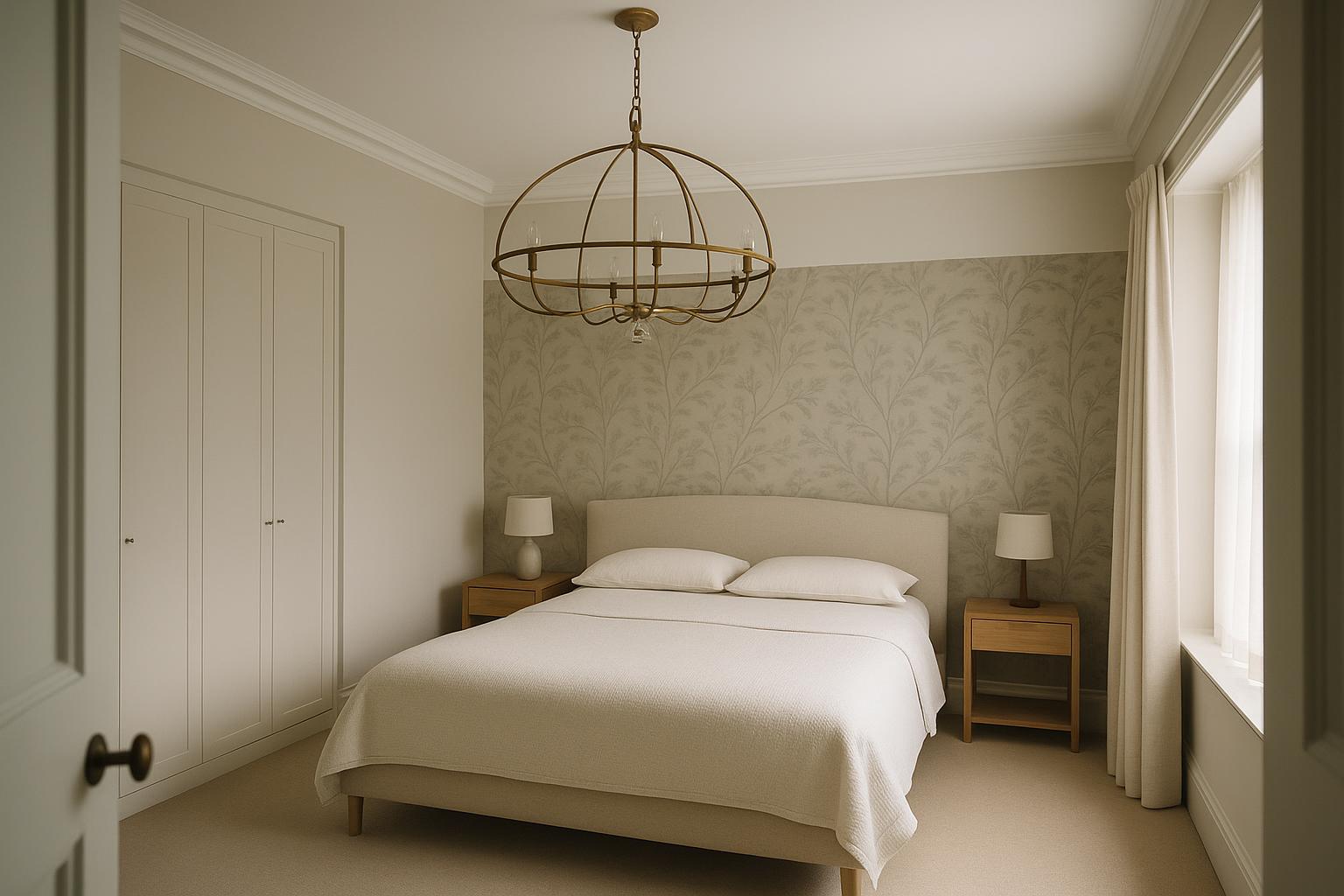
Glare depends on where the eye meets the source. A fitting that feels comfortable in a hallway may be distracting beside a sofa because people spend longer looking towards it from a lower position. Bedside wall lights also need to be assessed from the pillow, particularly if the lamp or LED points sideways.

Study the diffuser, shielding and direction of light before comparing output figures. A narrow beam produces contrast and definition; a broad diffused source creates a quieter wash. Neither is inherently better. The choice depends on whether the wall is providing orientation, task light, background light or a decorative accent.
For LED wall lights, check the stated colour temperature, dimming information and method of servicing the light source or driver. With a replaceable-lamp fitting, confirm the lamp cap, permitted size and whether the lamp remains concealed from normal sightlines. Product dimensions alone will not answer those questions.
Connected rooms benefit from a considered colour appearance. A noticeably cooler wall light beside warmer pendants can divide an open-plan space unintentionally. Compare the stated specifications rather than relying on photographs, as screens and styled room images do not provide a dependable colour reference.
In the same direction, Long-Drop Lighting for Tall Homes: What to Specify Before Ordering offers useful ideas for choosing home lighting more confidently.
Plan groups by architecture, not formula
A pair suits an arrangement with a genuine centre: a fireplace, bed, mirror or piece of furniture. It should not be used merely because symmetry feels safe. If one side of the wall is interrupted by a door or tall cabinet, a single fitting placed in relation to the usable area may look more resolved.
Repeated lights can give a long corridor rhythm, but spacing should be based on the illuminated areas as well as the bodies of the fittings. Narrow beams placed too close together may form a busy chain of overlapping shapes. Set too far apart, they can create isolated bright patches with dark gaps between them.
Draw the full wall to scale, including doors and pictures, then add the approximate spread of each beam. This is more informative than applying one standard distance throughout a house. A short landing, a long Limerick townhouse hall and a double-height stairwell all need different judgement.
Use finish to connect rather than match
The finish can establish a relationship with the room without copying every handle or tap. A brushed brass wall light might pick up the fine edge of a mirror, while a black fitting can relate to a window frame or fireplace insert. One clear connection is usually enough.
Consider how the surface behaves under light. Polished metal attracts reflections and reads as a stronger feature. Brushed and matt finishes are quieter, though their exact appearance can change between daylight and evening. White designer wall fittings can almost disappear against pale paint, leaving the beam to provide the character.
When several metals are already present, avoid introducing another simply for variety. A restrained finish palette gives sculptural fittings more room to work and prevents a compact sitting room or bedroom from feeling over-specified.
For more consistent lighting throughout the home, the article Survey Your Home Before Choosing Light Fittings may also be helpful.
Settle wiring and controls before decorating
A crisp installation depends on details concealed behind the fitting. Check the backplate dimensions, cable entry point and fixing arrangement against the proposed electrical position. A small geometric fitting may not cover an oversized opening or an inaccurately placed cable.
Decide how each light will be operated. Bedside controls should be reachable without getting up. Hall and landing lights need controls at the routes where people enter and leave. Dimming can make a decorative fitting more versatile, but only where the lamp or integrated LED, driver and control are stated to be compatible.
- Read the manufacturer’s instructions before finalising cable positions.
- Confirm suitability for the intended room, especially in bathrooms or exposed locations.
- Allow access for cleaning, lamp replacement or other stated maintenance.
- Keep switches clear of curtains, furniture and opening doors.
Have fixed wiring planned and completed by a registered electrical contractor. On a renovation, make the product choice before plastering where possible; moving a connection afterwards can spoil both the wall finish and the intended alignment.
Build a disciplined shortlist
Before ordering, compare no more than a few serious candidates against the same checklist: overall dimensions, projection, beam direction, source visibility, finish, control compatibility and maintenance access. Then return to the room and remove any proposed fitting that lacks a clear purpose.

Browse the modern wall lights collection with your measurements and wall photographs to hand. Shortlist by the effect required rather than by shape alone, and verify the individual product information before purchase. A wall light earns its place when the fitting, beam and architecture still make sense from every normal viewpoint.