Good boundary lighting reveals the parts of a garden that people use while leaving unnecessary brightness out of the...
- There are no more items in your cart
- Shipping
- Total €0.00
A Bathroom Lighting Plan That Works Morning and Night
Draw the room before choosing fittings
The best lighting for bathroom use begins with the layout, not a particular fitting. Mark the basin, mirror, shower, bath, cupboards, door and main walking route on a simple sketch. Add the ceiling height, mirror width and any sloping sections or shallow recesses. These measurements reveal where light is needed and where a fitting could obstruct a cabinet door or feel too close overhead.

Consider the room at the times it is actually used. Clear light at the basin matters on a dark winter morning, but the same bathroom may need a gentler setting before bed. Cleaning calls for enough illumination to see marks around taps, grout and storage. A window helps during the day, although a small frosted window or roof light may contribute less than expected in overcast weather.
Give each proposed source one main job: facial light, background illumination, shower light or directed light for a dark recess. A fitting can support more than one task, but expecting a single central light to do everything usually leaves shadows where they are least welcome.
Start with the light at the mirror
The basin is the most demanding position because the light must reach a person rather than simply brighten the room. A ceiling source above or behind the user can shade the eyes, chin and sides of the face. Increasing its output does not necessarily solve the problem; it may only make the top of the head and the basin brighter.
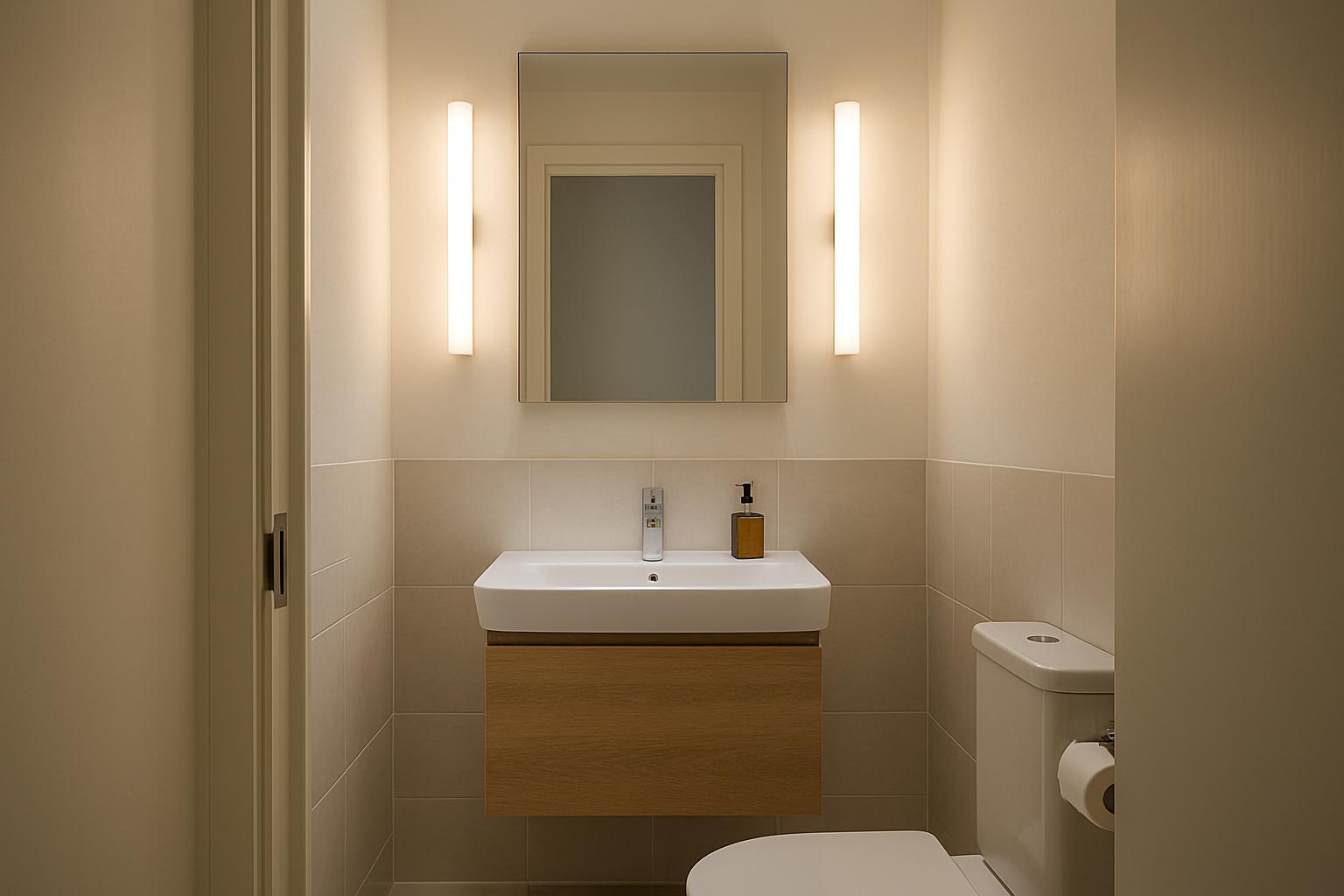
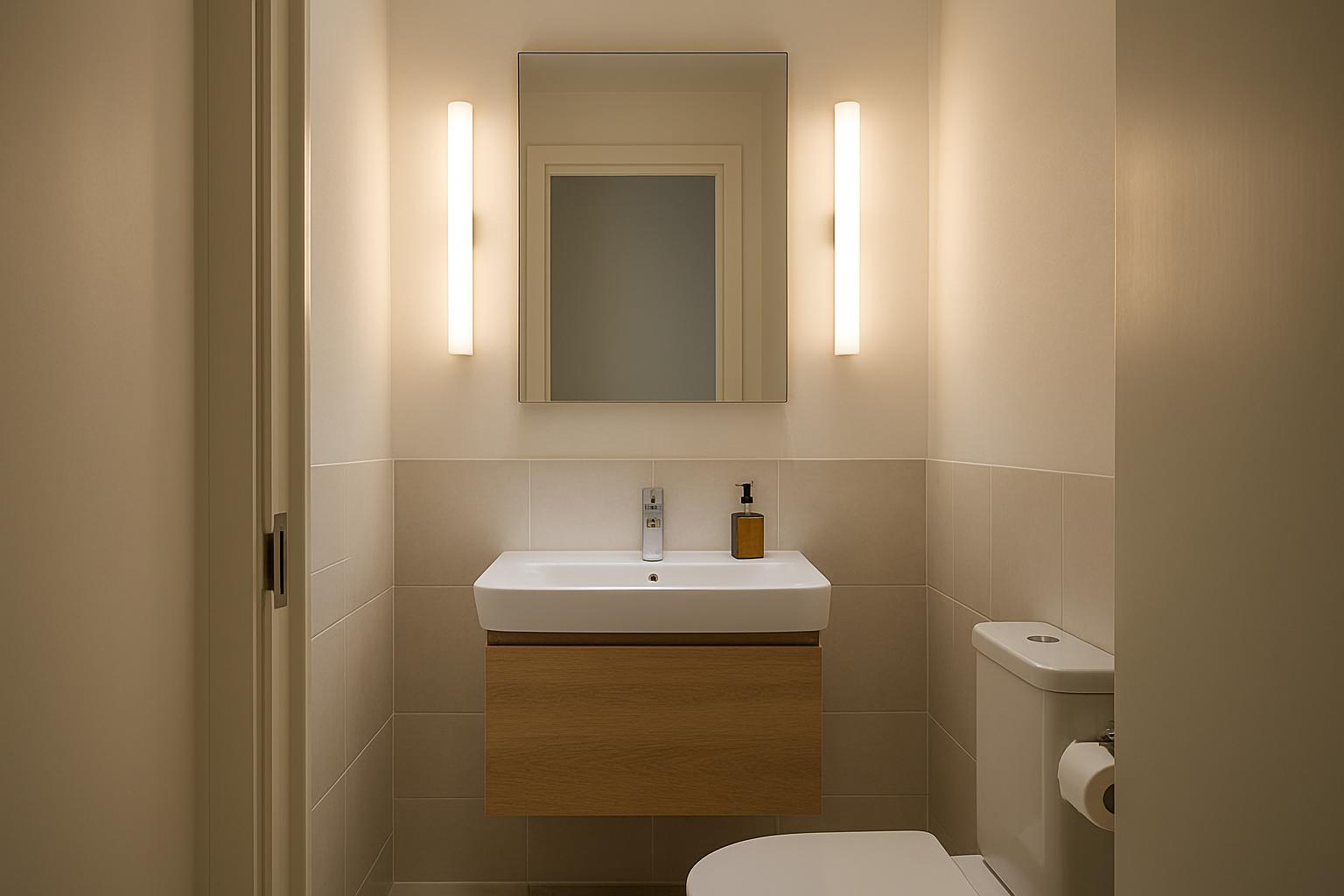
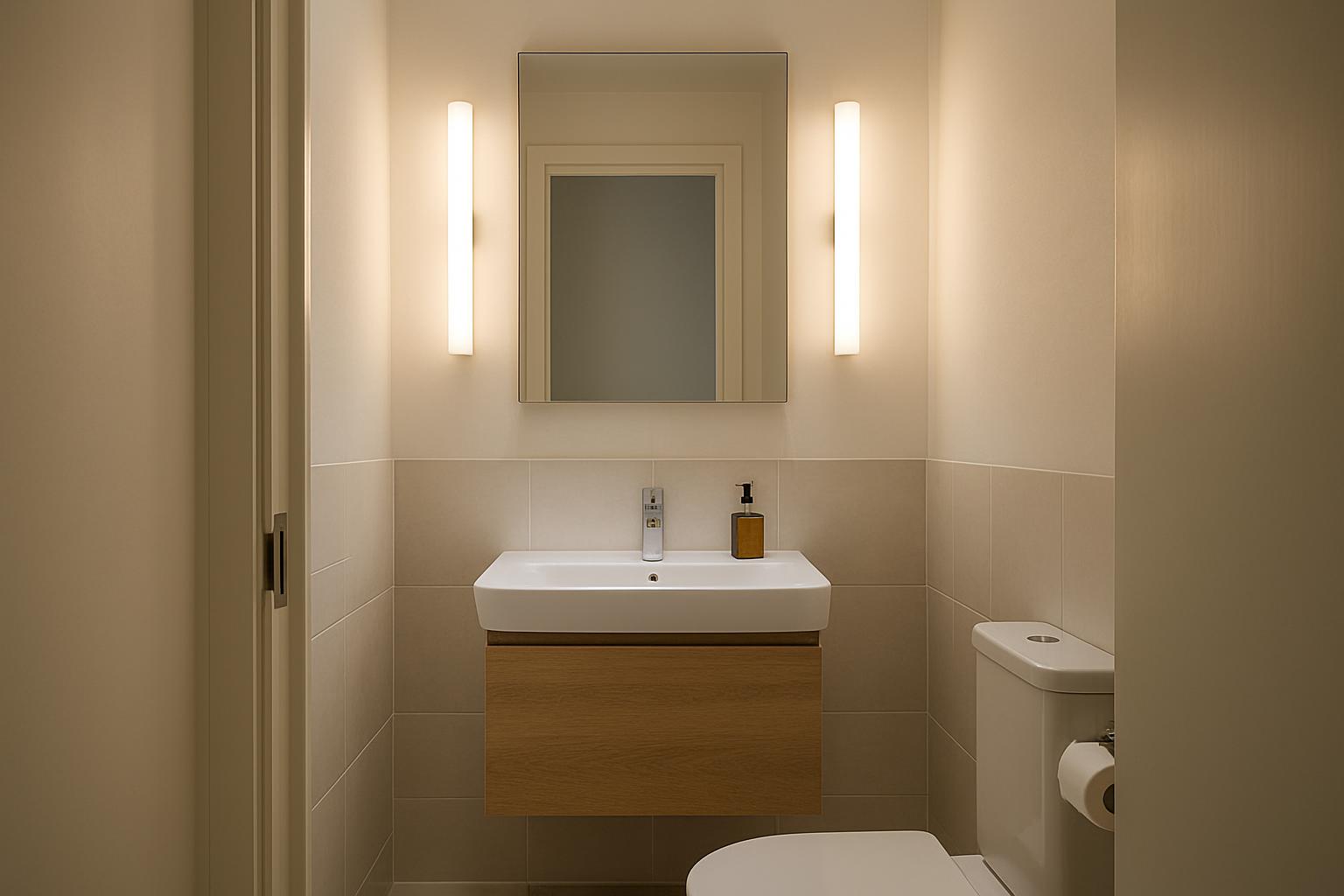
Bathroom mirror lights placed on both sides of the mirror can provide balanced facial illumination. Diffused fittings are generally more comfortable than exposed points of light reflected in the glass. Where there is no room at the sides, a broad, softly diffused fitting above the mirror is a practical alternative. Check that it projects light forwards and down towards the user rather than washing only the wall.
Measure before ordering. A mirrored cabinet may sit proud of the wall, limiting the usefulness of a shallow light above it. Side fittings need to clear shelves, towel hooks and opening doors. An illuminated mirror can give a tidy result, but a glowing border intended mainly for atmosphere may not provide enough useful light for shaving, make-up or skincare. Assess the stated output and direction as well as the appearance of the mirror when switched off.
Use the ceiling light for background illumination
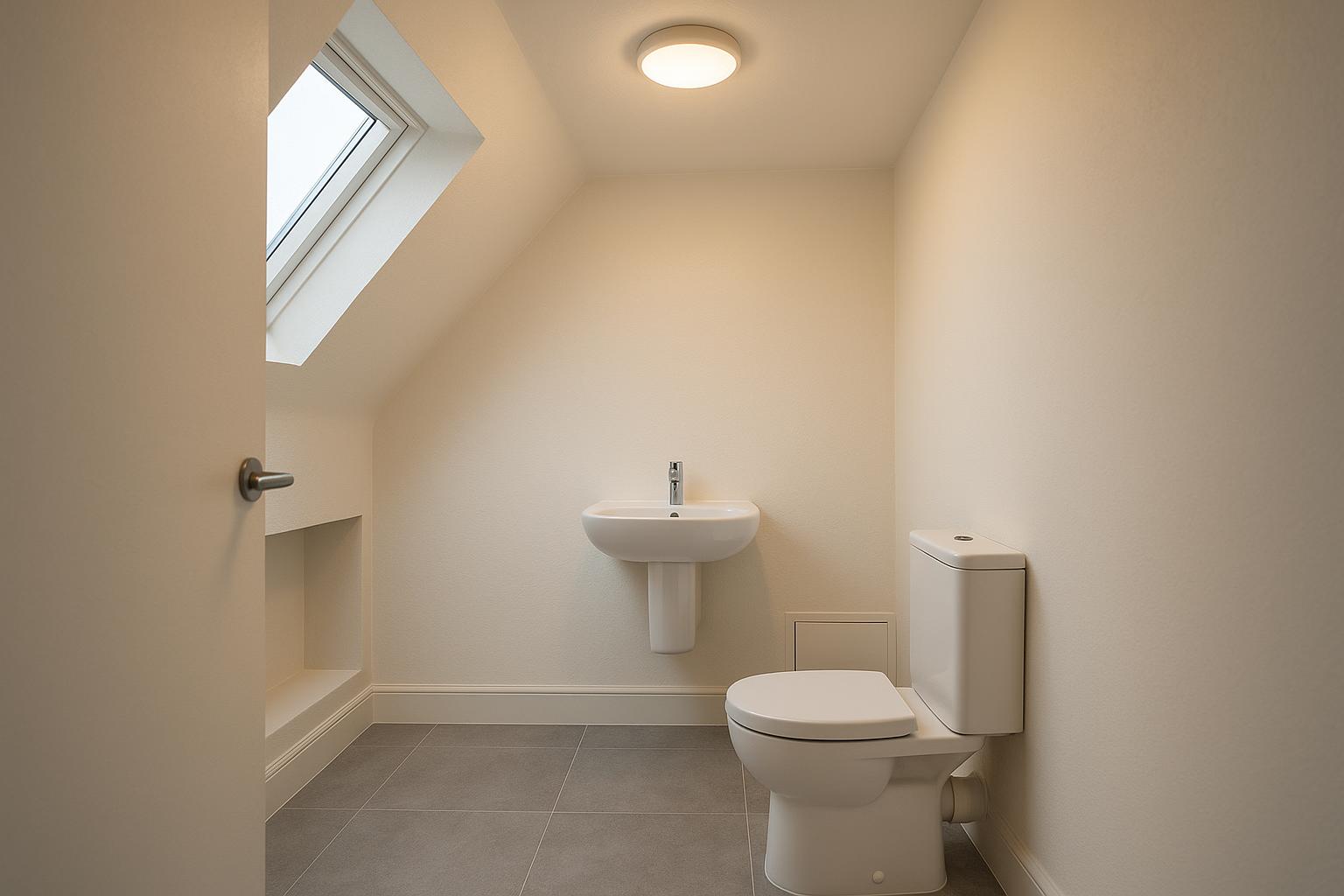
Bathroom ceiling lights should make the floor, doorway and main surfaces easy to see without dominating the room. A flush or close-to-ceiling design is often suitable for an apartment en suite, dormer bungalow or converted attic because it preserves headroom and keeps the ceiling visually calm.
A diffuser helps spread light and reduces the hard reflections that can occur on mirrors, glazed tiles and polished stone. In a long family bathroom, one central fitting may not reach the shower end or a recessed vanity. That is a reason to add a targeted source, not necessarily to choose an excessively bright central light.
To complement this topic, you can also read Long-Drop Lighting for Tall Homes: What to Specify Before Ordering.
Scale the fitting to the visible ceiling area. A broad fitting can make a low ceiling feel oppressive, while a tiny disc may look poorly judged in a larger room. Note both diameter and projection; product photographs rarely convey either accurately.
Specify showers and baths separately
A bathroom is divided into areas with different electrical safety requirements. The appropriate fitting depends on its exact distance and position relative to the bath or shower, its resistance to water ingress and the manufacturer's installation instructions. A general description such as bathroom light does not mean that a product is suitable for every location in the room.
Mark the intended position of each fitting before buying it. Check the stated IP rating and installation guidance against the proposed bathroom zone, rather than relying on a rule of thumb or selecting the same specification for every ceiling position. The electrical contractor also needs to consider the wiring, controls and the construction above or behind the fitting.
Have the final arrangement confirmed by a Registered Electrical Contractor familiar with current Irish requirements. This is particularly important beside or above showers and baths, and wherever a fitting could be exposed to spray or persistent moisture.
Position downlights for surfaces, not symmetry
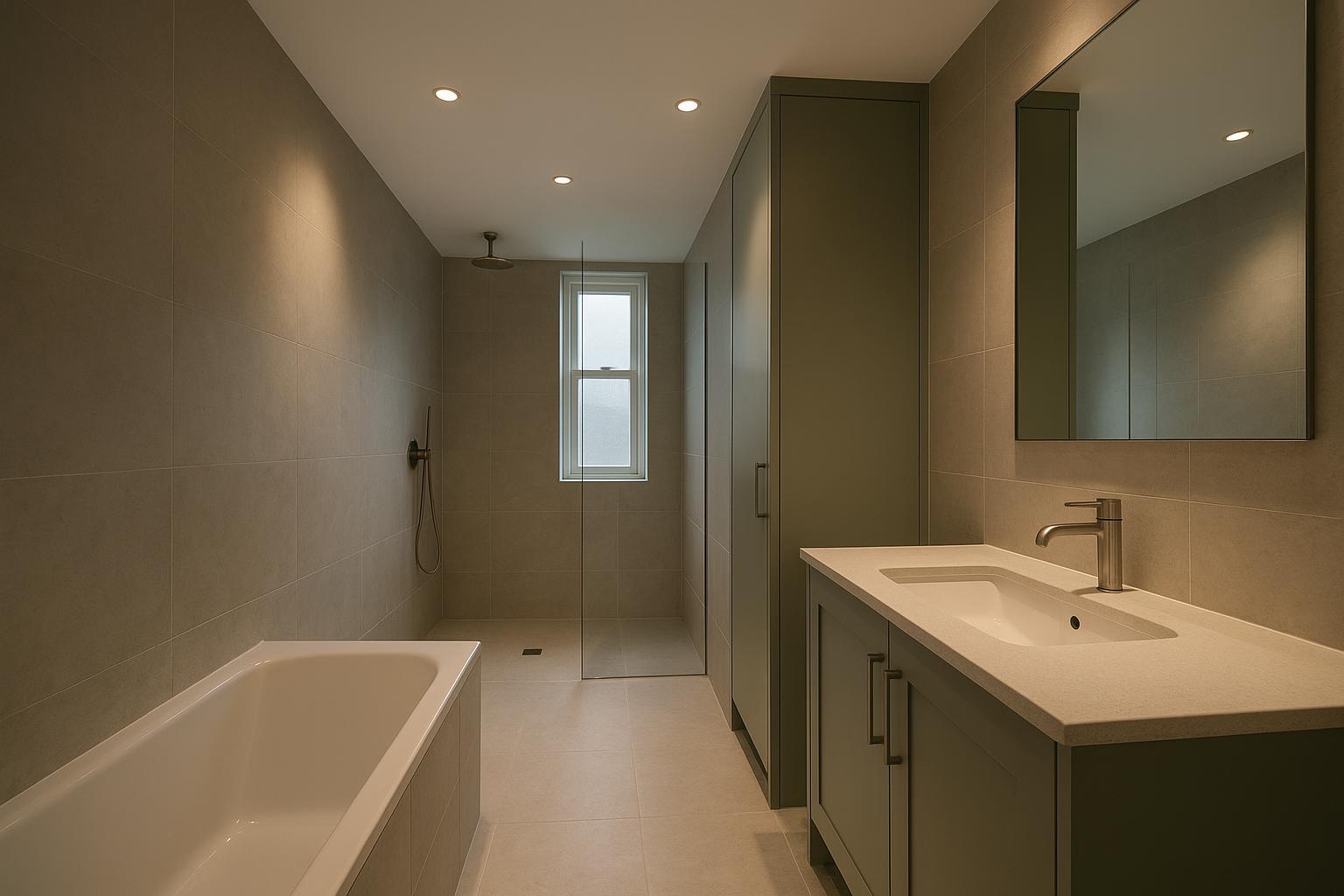
bathroom spotlights and recessed downlights are useful in long, irregular rooms, but a neat ceiling grid is not a lighting plan. Start with the vanity, shower, bath edge and storage, then place light where it can reach those areas without producing awkward reflections.

A downlight directly behind someone at the basin may cast their shadow towards the mirror. One too close to a mirrored cabinet or glossy shower screen can create a bright reflected point at eye level. Fixed downlights therefore need careful positioning, while adjustable spotlights should be aimed at a useful surface rather than straight into the room.
In the same direction, Survey Your Home Before Choosing Light Fittings offers useful ideas for choosing home lighting more confidently.
Several restrained sources often produce a calmer result than a few intense beams. Before specifying recessed fittings, ask the contractor to check the available ceiling depth and any fire, insulation, moisture or acoustic considerations associated with the ceiling construction. Surface-mounted spotlights may be a more straightforward option where the void is shallow or difficult to access.
Make compact and low rooms feel comfortable
Small bathrooms do not automatically need more light fittings. A shallow ceiling light and an effective mirror light may cover most needs, with one additional source only if the shower or a recess remains noticeably dark. Too many visible fittings can make a compact Dublin apartment bathroom feel busier without improving how it works.
In an attic bathroom, follow the usable standing area rather than the geometric centre of a sloping ceiling. Light over an inaccessible corner contributes little, while the basin and clear floor area remain in shadow. Check the projection of wall lights as well as ceiling fittings so that they do not intrude into narrow circulation space.
Dark navy, green or charcoal finishes absorb more light than pale walls and may require extra attention at the mirror and inside alcoves. Glossy white tiles reflect light efficiently but can also reveal glare. Matt and softly reflective surfaces tend to spread illumination more gently.
Keep colour and glare under control
Compare lumen output rather than judging brightness from wattage alone. Also review the stated colour temperature and colour-rendering information, especially for the mirror light. Nearby sources do not need to be identical, but an obviously cool mirror beside a very warm ceiling light can make skin tones, tiles and painted cabinetry appear inconsistent.
For more consistent lighting throughout the home, the article Place Pendant Lights Around the Room, Not Just the Ceiling may also be helpful.
Look at where the bright part of the fitting will be visible. A bare lamp above a bath may be uncomfortable when viewed while reclining, and a powerful spotlight reflected in a mirror can be distracting even if the room is technically well lit. Diffusers, sensible aiming and moderate output are often more valuable than maximum brightness.
Plan switching before decorating
Separate control of the main light and mirror light gives a bathroom useful flexibility without making it complicated. The mirror can be used for grooming, both layers can be switched on for cleaning, and the background light can operate alone when a softer effect is preferred.
If dimming is wanted, confirm compatibility between the light source, fitting and control equipment before purchase. Integrated LED fittings are not automatically dimmable. Agree switch positions, cable routes and any low-level night lighting with the contractor before walls and ceilings are closed or tiled.
Take a measured list when shopping
Record the dimensions, intended location and purpose of every fitting. Include ceiling projection, mirror width, available wall space, finish, light output, colour appearance, dimming requirement and the relevant wet-area specification. This makes comparison easier and reduces the risk of buying a fitting that looks suitable online but cannot be installed where planned.

- Mirror: choose for facial illumination, diffusion and available mounting space.
- Ceiling: provide comfortable background light at a scale suited to the room.
- Shower or bath: confirm the exact zone, IP information and installation instructions.
- Spotlights: add them only where they address a specific surface, shadow or awkward layout.
- Controls: decide switching and dimming before electrical work and decoration are complete.
With those decisions made, compare suitable bathroom lights by dimensions, fitting type, finish and stated specifications. A successful scheme is not the one with the fullest ceiling. It is the one that gives clear light at the mirror, safe illumination where water is present and a comfortable setting at either end of the day.