Good boundary lighting reveals the parts of a garden that people use while leaving unnecessary brightness out of the...
- There are no more items in your cart
- Shipping
- Total €0.00
The View from the Pillow: Crystal Lighting for a Calm Bedroom
A bedroom is one of the few rooms where a ceiling light is studied while you are lying down. From that angle, a fitting that looked delicate in a product photograph can appear much larger, brighter or more elaborate. This is why crystal lighting needs to be judged differently here than it would be in a hallway or dining room.
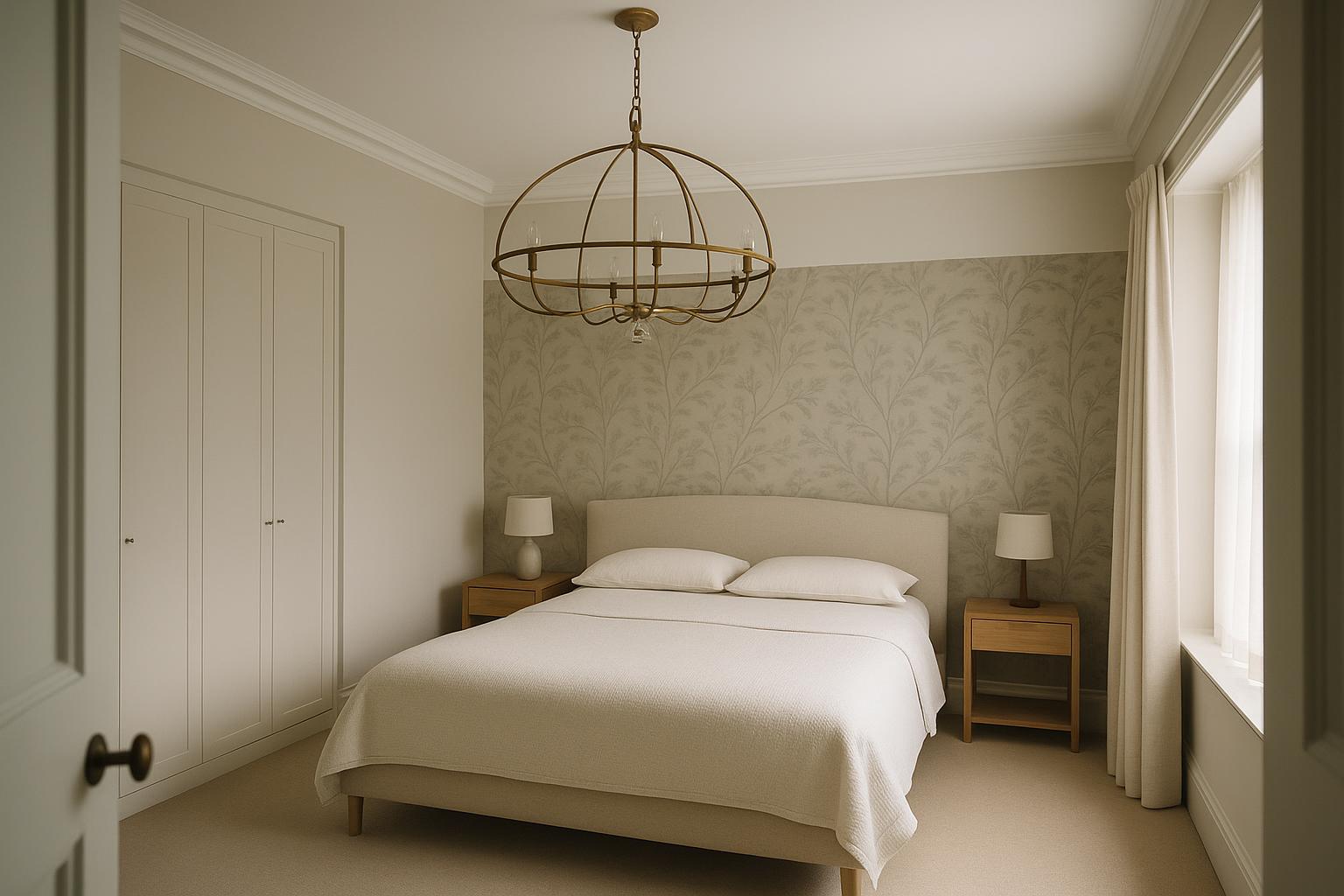
The most convincing crystal ceiling lights for bedroom interiors add a controlled point of interest rather than turning the whole ceiling into a display. Profile, crystal density, visible lamps and reflections all matter. Get those elements right and the fitting can feel calm by day, useful on a dark winter afternoon and softly decorative at night.
Set a limit on decoration
Begin with the room rather than the fitting. Count the surfaces that already attract attention: a patterned wall, buttoned headboard, mirrored wardrobe, ornate bed frame or strongly veined stone fireplace in a period bedroom. If two or three of these are already prominent, the ceiling light should have a simpler outline.

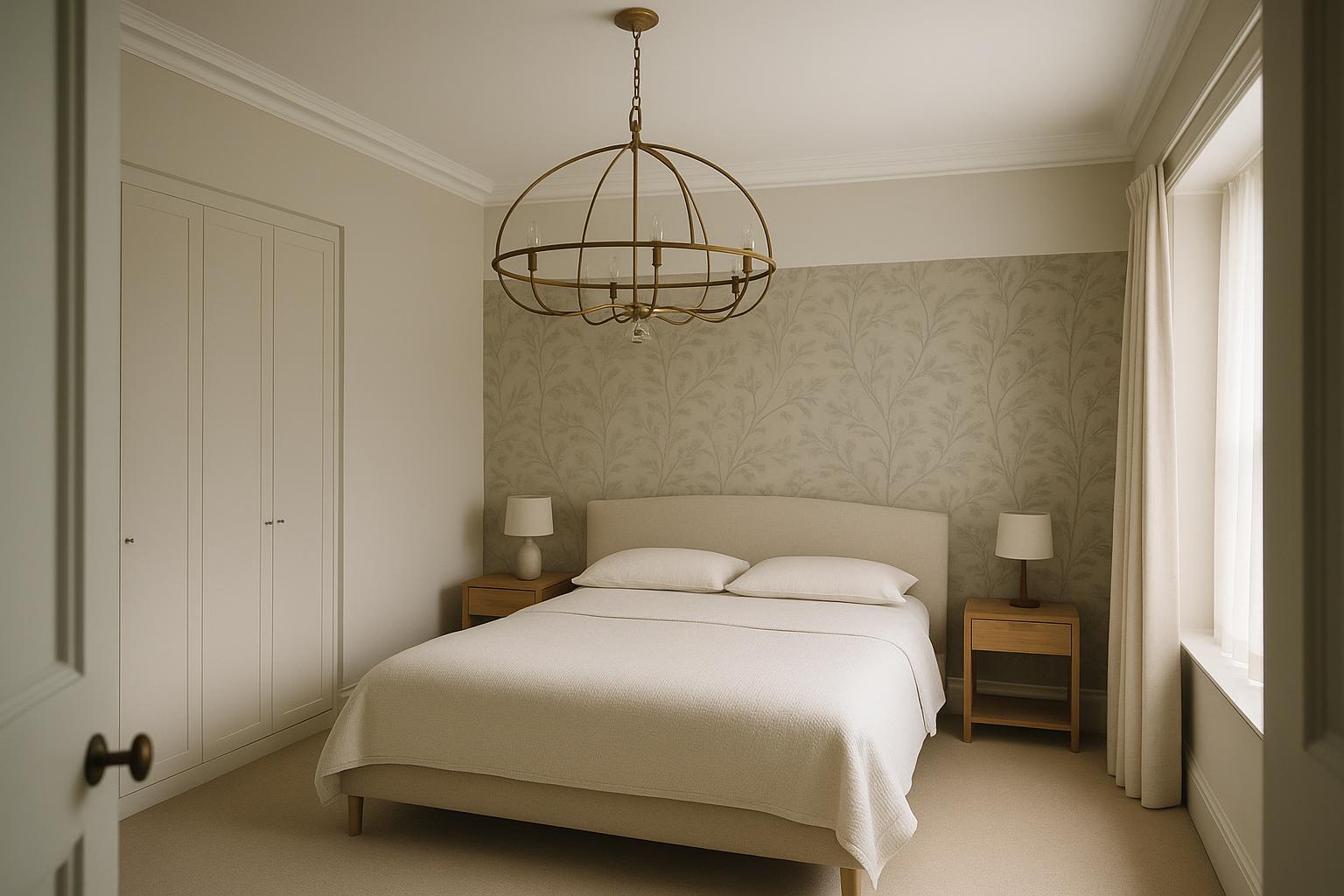
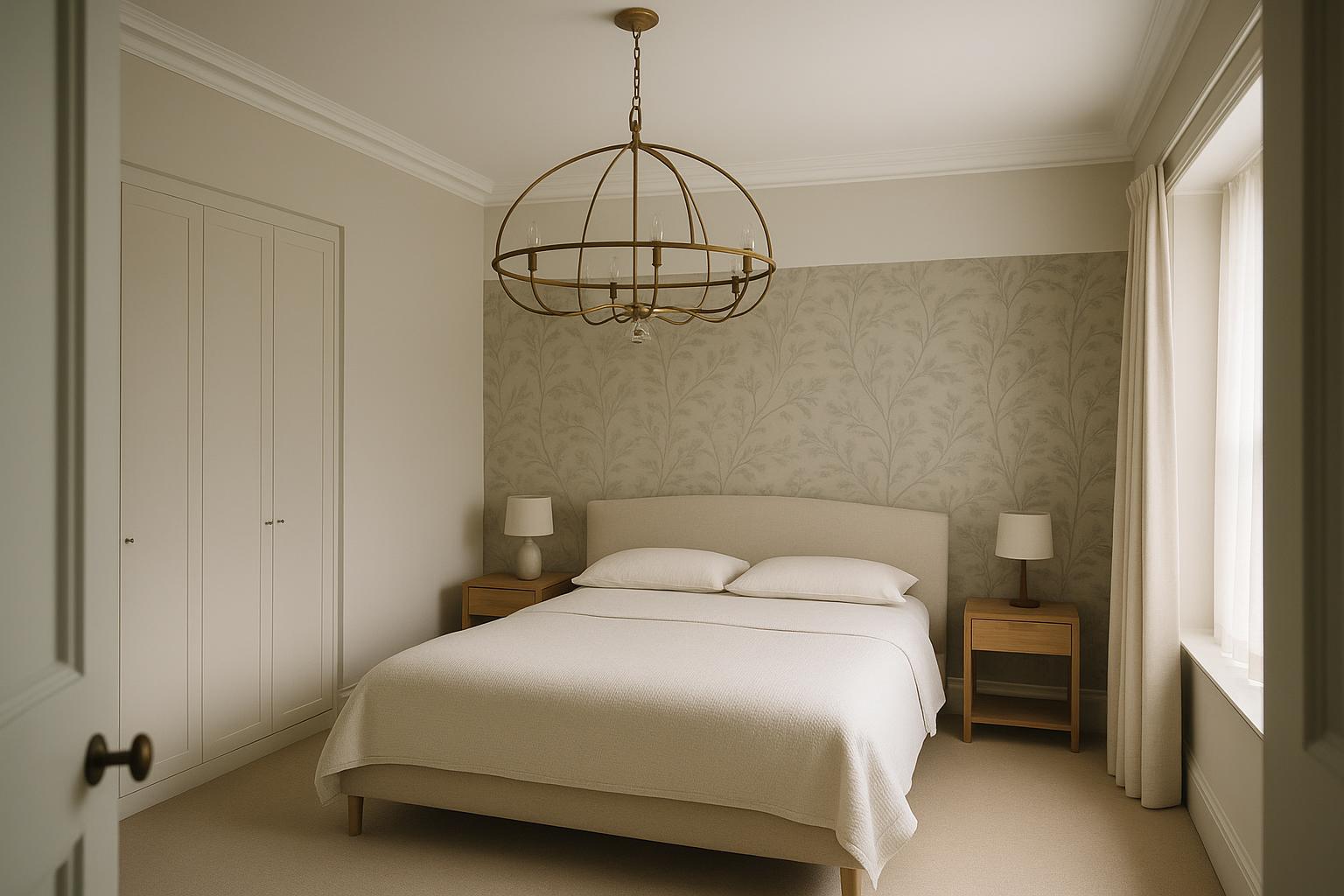
Crystal density changes the effect considerably. Closely packed drops or faceted pieces create a solid, jewellery-like feature. Open metalwork with fewer crystal accents leaves more ceiling visible and usually feels lighter. Smoked or tinted elements can reduce the crispness of clear crystal, although they may also give the fitting a stronger visual weight when it is switched off.
Decide which quality you actually want: a defined silhouette, moving reflections or an ornamental centrepiece. Trying to maximise all three is usually what makes a bedroom feel overdone.
Measure the fitting from the bed
Product dimensions should be read in centimetres and considered in three directions: width, total depth and the size of the ceiling plate. Width determines how strongly the light relates to the bed. Depth affects the amount of open space above it. The ceiling plate matters on sloping ceilings, beneath decorative plasterwork or where the existing electrical point is close to a joist or other obstruction.
In a dormer bungalow or converted attic, crystal flush lights are often more comfortable than suspended designs. A shallow fitting can still have layered detail, but it will not intrude as far into an already compressed ceiling plane. Low-profile chandeliers can also work, provided their full projection is checked rather than assumed from a front-facing photograph.
A high ceiling does not automatically call for a long drop. In a Georgian terrace, a broad fitting with moderate depth may balance a tall headboard and wardrobe more successfully than a narrow chandelier hanging well into the room.
Mark the proposed width on the ceiling with low-tack tape or hold up a light paper template without covering the electrical point. Then look from the doorway and the bed. This simple scale check is more revealing than relying on the room measurements alone.
To complement this topic, you can also read Read the Wall, Then Choose the Light.
Check the view from below
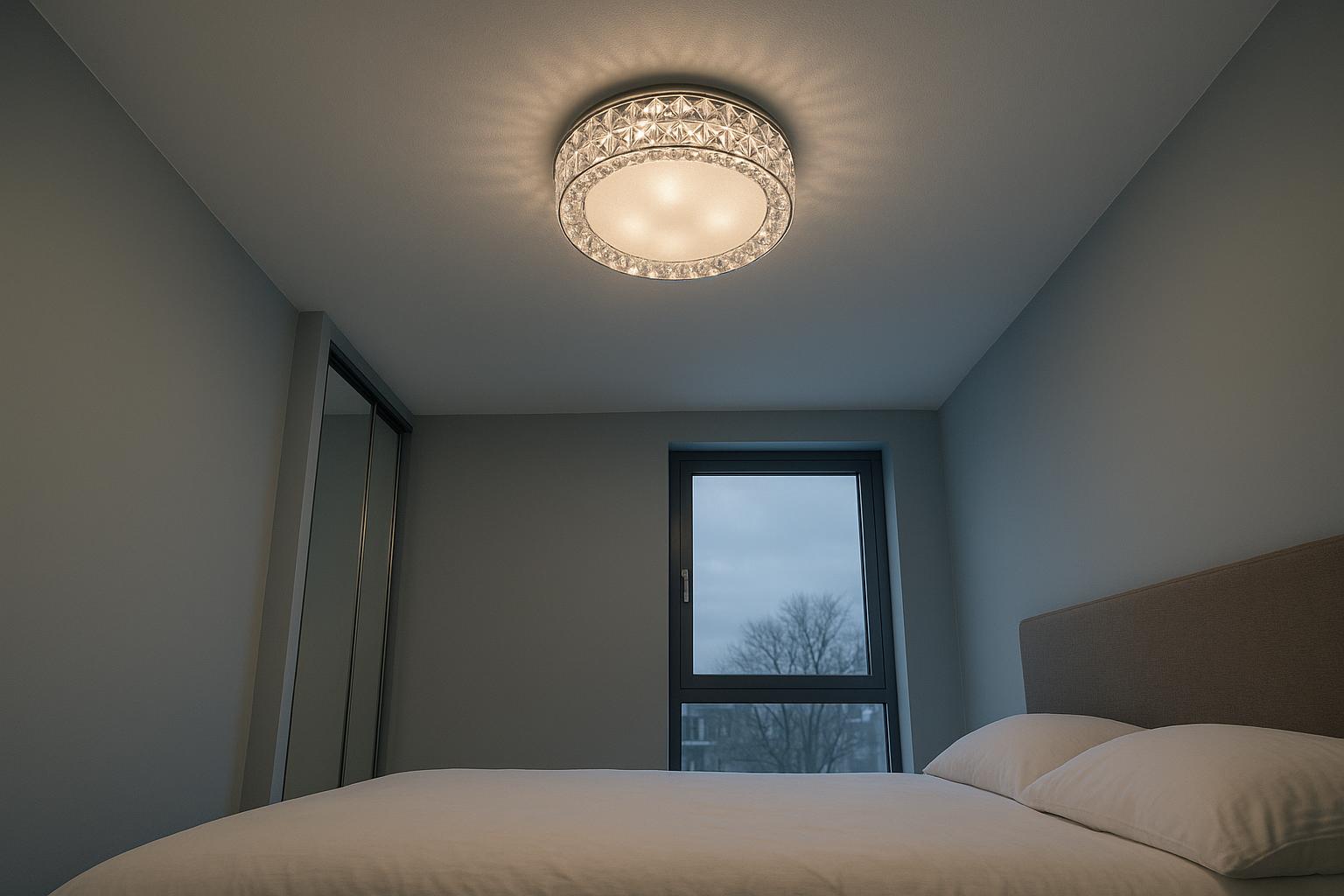
The critical sightline runs from the pillow to the underside of the fitting. Exposed lamps, polished metal and clear crystal can form concentrated glare points when seen directly. A design may therefore be comfortable when viewed across the room but tiring when somebody sits up to read or watch television.
Look for underside photographs and note whether the light sources are exposed, partly screened or concealed within the crystal arrangement. A diffuser can soften the view, while an open candle-style design will create more distinct points of light. Neither is inherently wrong, but the latter needs more careful control in a bedroom.
Mirrors deserve the same attention. In a compact Dublin apartment, one mirrored wardrobe panel can reproduce much of the fitting. A partial reflection may add depth; a complete reflection directly opposite the bed can double the apparent brightness and decoration. Check the likely reflection from both sleeping positions, not only from the doorway.
Choose brightness independently of style
Crystal changes how light is perceived, but it does not tell you whether a fitting will adequately light the room. Compare the stated light output and distribution where that information is available. A heavily enclosed design may sparkle at its centre without sending much useful light towards wardrobes or the floor.

Warm-toned light generally sits comfortably with timber, cream, clay, muted green and soft textiles. More important than choosing a fashionable colour temperature is keeping the central light visually comfortable beside the bedside fittings. Noticeably different light colours in the same small room can make the scheme feel disconnected.
If dimming is part of the plan, confirm compatibility before ordering. The fitting, replaceable lamps or integrated LED driver, dimmer and control method must be suitable for one another. Integrated LED models should also be checked for expected maintenance and whether the light source or driver can be replaced. Do not assume that a decorative fitting is dimmable because it uses LED.
Use the finish to settle the sparkle
The frame can either quieten the crystal or sharpen it. Warm brass and muted gold finishes tend to blend with oak, walnut, warm neutrals and earthy colours. Chrome and polished silver produce a cooler, more reflective effect beside white, grey, navy and mirrored furniture. Black or dark bronze outlines the fitting clearly and can make a small amount of crystal feel more architectural.
In the same direction, A Bathroom Lighting Plan That Works Morning and Night offers useful ideas for choosing home lighting more confidently.
There is no need to match every handle and lamp base. Repeating the metal once, perhaps on a mirror frame or a pair of discreet wall lights, is enough to make the choice look deliberate. Too many identical metallic accents can give a restful room a showroom quality.
Ceiling colour also alters the result. Clear crystal stands out strongly against plain white. On a soft grey, muted blue or deeper painted ceiling, the same pieces may appear denser and less glittering during the day.
Give evening tasks to lower lights
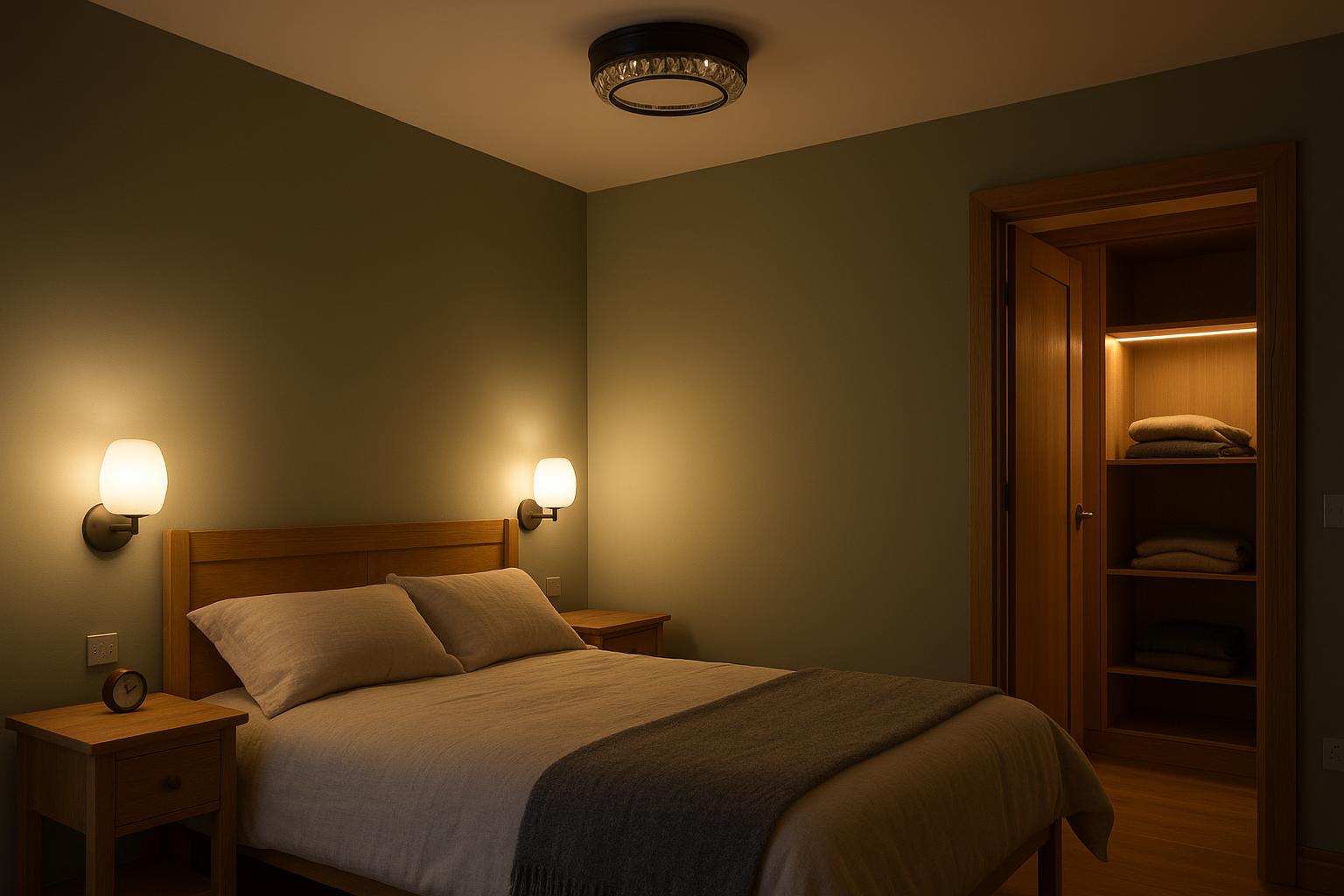
A central fitting is useful for dressing, tidying and finding something in a wardrobe, but it should not carry the full lighting scheme. Lower sources are more comfortable before sleep and allow the crystal light to be switched off when its reflections are no longer wanted.
- Reading: use bedside lamps or wall lights that direct light towards the book without shining across the other side of the bed.
- Dressing: provide light near the wardrobe or dressing mirror rather than expecting the ceiling fitting to illuminate the face evenly.
- Storage: consider discreet internal wardrobe lighting where deep shelves remain dark, following the furniture and light manufacturers’ instructions.
Keep these supporting fittings quieter than the centrepiece. Plain opal glass, fabric shades or restrained metal forms can do their job without adding another layer of sparkle. Where new controls or wiring are planned, discuss switching positions with a registered electrical contractor. Being able to control appropriate bedroom lights without crossing a dark room is more valuable than adding another decorative fitting.
Check cleaning and installation before buying
Crystal looks clearest when free from dust, so complexity has a practical cost. Open arrangements are easier to reach than deep tiers with many small suspended pieces. Check whether decorative elements are fixed or removable, and follow the maker’s care instructions rather than using a general glass cleaner automatically.
For more consistent lighting throughout the home, the article Long-Drop Lighting for Tall Homes: What to Specify Before Ordering may also be helpful.
For routine care, allow the fitting to cool and ensure the electrical supply is safely isolated before handling lamps or detachable components. Do not rotate, pull down or dismantle a fitting to reach awkward areas. If safe access requires an unstable ladder position or work above a tall bed, arrange suitable assistance.
Weight and fixing requirements vary considerably. A registered electrical contractor should confirm the ceiling support, mounting method, existing connection and suitability for a sloping ceiling where relevant. This check is particularly important when a lightweight shade is being replaced by a substantially heavier crystal fitting.
Make the final choice with the light switched off
The fitting will spend much of the day unlit, especially through long summer evenings. Its outline, metal finish and relationship with the ceiling should therefore work without sparkle. If the unlit design looks too dense above the bed, dimming will not solve the underlying scale problem.

Before ordering, compare the full dimensions, underside view, light-source information, dimming requirements and care instructions. Then view the proposed position from the pillow, doorway and main mirror. Those three angles reveal most of the issues that room plans miss.
For restrained flush designs, geometric modern crystal lights and fittings with a little more ceremony, browse the crystal ceiling lights collection. Choose the version that earns its place when switched off and brings only as much sparkle as the bedroom can comfortably hold.